الزيتون
Travel guide
Olive oil: the complete guide
Olive oil: the complete guide
Few foods carry as much history, culture and flavour as the olive. It is the tree of the Mediterranean — a symbol of peace and permanence — and its oil is the golden thread running through 3,000 years of Andalusian life. If you want to truly understand olives and olive oil, there is no better place to begin than here, in the province where more of it is made than anywhere else on Earth. This is our complete guide: where the olive came from, the great varieties and their flavours, how the oil is made and tasted, the protected oils of Andalusia, table olives, health and how to buy and cook with the real thing.

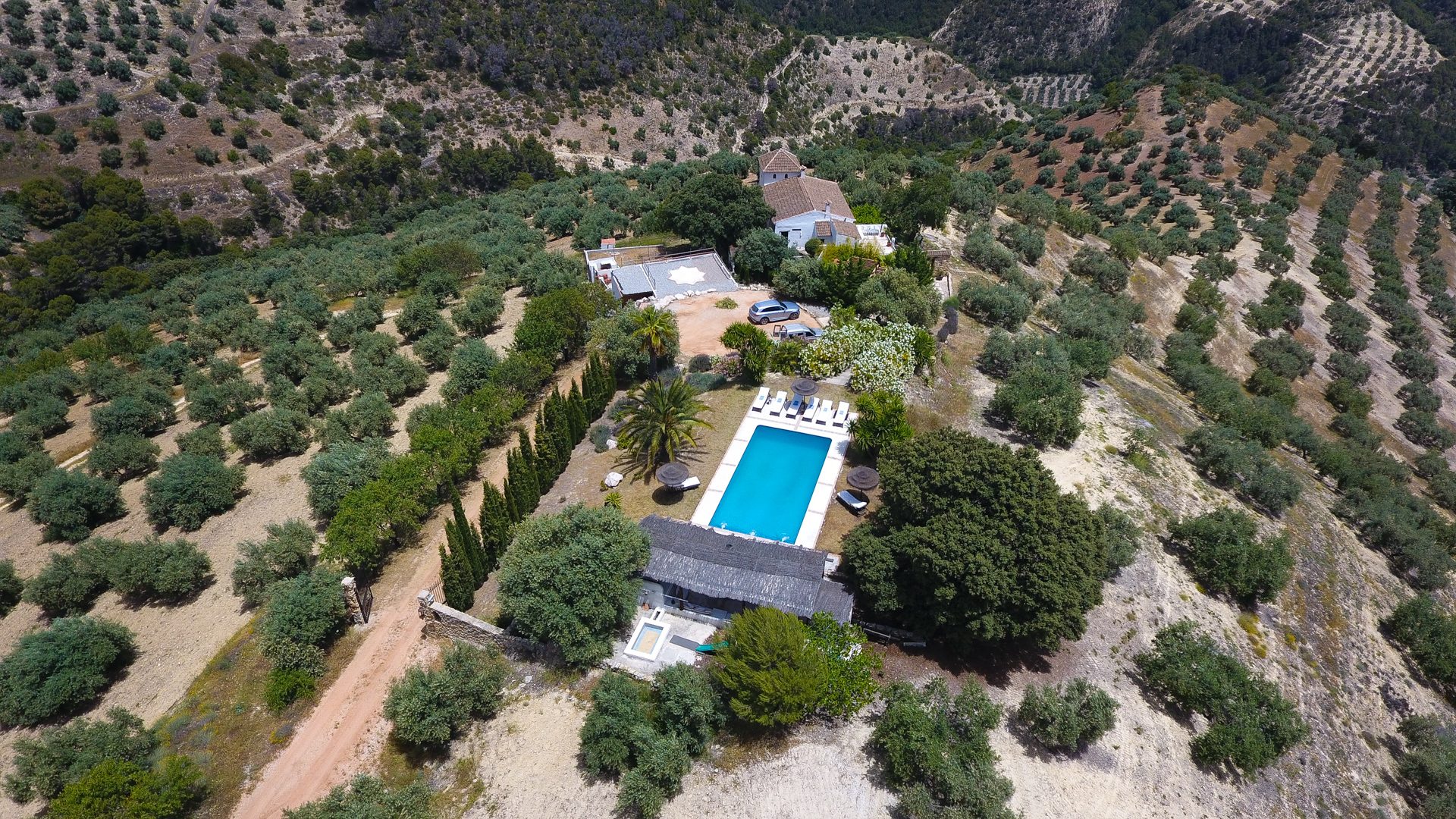
Cortijo Bujio sits among the olive groves of the DOP Poniente de Granada, so this subject is quite literally on our doorstep — the trees you see from the terrace are the same story told below.
The numbers are staggering. Spain is the world's largest olive-oil producer, responsible in a normal year for around 40–45% of global output. And the great majority of that — roughly 70–80% — comes from Andalusia. One province alone, Jaén, with something like 60 million olive trees across 550,000 hectares, produces about half of Spain's oil and close to a fifth of the world's — more than the entire country of Italy. When people speak of the "sea of olives," they mean the endless silver-green rows of Jaén. (See our guide to the Sea of Olives.)
The olive was domesticated in the eastern Mediterranean some 6,000 years ago and carried west by the Phoenicians, who founded Cádiz around 1100 BCE, and later the Greeks. Under Rome, southern Spain — the province of Baetica — became the oil cellar of the empire; the Monte Testaccio in Rome is a hill built from the shards of some 53 million Spanish oil jars. The Moors of Al-Andalus perfected its cultivation, and left us the very words: Spanish aceituna ("olive") and aceite ("oil") come from the Arabic az-zaytūna and az-zayt. (Read the full story: The History of the Olive.)
Spain grows more olive cultivars than anywhere. Picual — the king of Jaén — makes robust, peppery, ultra-stable oil and accounts for a quarter of all the olive oil on the planet. Hojiblanca, Arbequina (soft and buttery), Picudo and others each bring their own character and grow in their own corners of the south. (See The Great Olive Varieties.)
Great oil is simply fresh olive juice, extracted by mechanical means alone within hours of harvest. Understanding the grades — extra virgin, virgin and the rest — and learning the three positive flavours of a great oil (fruity, bitter, pungent) changes the way you shop and eat forever. (See How Olive Oil Is Made and How to Taste Olive Oil.)
Andalusia holds twelve olive-oil Protected Designations of Origin (DOP) — Baena, Priego de Córdoba, Sierra Mágina, Sierra de Cazorla, Montes and Poniente de Granada, Estepa, Antequera and more — each with its own varieties and character. (See The DOP Olive Oils of Andalusia.)
Not all olives become oil: Spain is also a table-olive giant, home to the plump Gordal and the world-famous Manzanilla. (See Table Olives.) And the health story — polyphenols, oleocanthal, the Mediterranean diet — is one of the best-evidenced in nutrition. (See Olive Oil & Health and Buying, Storing & Cooking with Olive Oil.)
Explore our interactive Olive Atlas — a world map of every olive-growing country, a searchable database of the world's olive varieties (with how to recognise each one), and the numbers behind olives and olive oil: who grows the most, who eats the most and what the oil is actually made of.
Where does most of the world's olive oil come from?
From Spain, and within Spain from Andalusia — which produces roughly 70–80% of the Spanish total. The province of Jaén alone makes close to a fifth of all the olive oil in the world.
What is extra virgin olive oil, exactly?
Olive juice extracted by purely mechanical means, with a free acidity of no more than 0.8% and no sensory defects — the highest grade, fit to eat just as it is.
Why does good olive oil taste bitter and peppery?
Because bitterness and a pungent "sting" in the throat are signs of high polyphenol content — the antioxidants that make an oil both flavourful and healthy. They are positive qualities, not faults.
Can I visit olive groves near Cortijo Bujio?
Yes — the villa sits within the DOP Poniente de Granada, surrounded by working olive country, and mills and tastings can be arranged nearby.
---
Cortijo Bujio stands among the olive groves of Granada. Explore the whole story: varieties, how oil is made, tasting, the DOP oils of Andalusia and olive oil around Montefrío.
Sources: International Olive Council; Foods & Wines from Spain (ICEX); Oliveoilsfromspain.org; Junta de Andalucía (denominaciones de calidad).