الزيتون
Travel guide
Table olives
Spain's great eating olives — Manzanilla, Gordal and Aloreña de Málaga — how they are cured, and how to enjoy them.
Not every olive is destined for oil. Some of the finest are grown to be eaten — cured, brined and seasoned into the little dishes that appear, free, on every Andalusian bar counter. Spain is one of the world's great table-olive nations, and the varieties on your plate, like the oils, come mostly from the sun-baked provinces around Cortijo Bujio.

A raw olive is inedibly, mouth-puckeringly bitter, thanks to a compound called oleuropein. Every table olive must first be cured to draw that bitterness out. The main methods are:
After curing, olives are dressed: with herbs, garlic, citrus, cumin, fennel or a splash of the region's own olive oil.
Manzanilla de Sevilla ("little apple") is the world's most popular table olive — the archetypal green Spanish olive. Firm, meaty and easy to pit and stuff (with pimento, anchovy or almond), it is the one most of the world pictures when it thinks of a Spanish olive. Its home is the province of Seville.
Gordal Sevillana — the "queen olive," and gordal means "the fat one." Enormous, plump and crunchy, with a fine, delicate flavour, the Gordal is prized purely for its magnificent size; it makes too little (and poor) oil to be anything but a table olive. Split one open, dress it with good oil, and you have one of the great simple pleasures of an Andalusian table.
Aloreña de Málaga was the first Spanish table olive to earn a Protected Designation of Origin (DOP). Grown in the Guadalhorce valley near Málaga, it is naturally low in bitterness, so it needs no lye — the olives are cracked, brined, naturally fermented and seasoned with thyme, fennel, garlic and pepper. Crisp, bitter-fresh and intensely herby, it is a revelation.
Hojiblanca, the great dual-purpose variety, also becomes a table olive — often cured into smooth, mild seasoned black olives. And in Extremadura the Cacereña yields fine black and marinated olives.
In Granada and much of Andalusia, olives arrive unbidden with your drink, part of the region's beloved free-tapa custom. A dish of cracked Aloreña with a cold beer, or fat Gordals with a glass of fino, is the perfect start to any meal. Buy them loose from a market stall — scooped from great tubs, dressed to order — rather than in jars. (See our guides to the free tapas of Granada and food & drink around Granada.)
Local markets near Montefrío sell cured olives by the scoop — Manzanilla, Gordal, cracked and herbed aliñadas — for a few euros. With local cheese, bread and a bottle of Poniente de Granada oil, they make the perfect villa spread. (See olive oil around Montefrío.)
Why can't you eat olives straight from the tree?
Because raw olives contain oleuropein, which makes them intensely bitter. Every table olive must first be cured — by lye, brine fermentation or natural methods — to remove that bitterness.
What is the most famous Spanish eating olive?
The Manzanilla de Sevilla, the classic firm green Spanish olive, often pitted and stuffed. The giant Gordal Sevillana (the "queen olive") is the other great favourite.
What is an Aloreña olive?
A table olive from Málaga and the first Spanish one to earn a DOP — cracked, naturally brined and seasoned with thyme, fennel, garlic and pepper. It needs no lye because it is naturally low in bitterness.
Where can I buy good olives near Cortijo Bujio?
At local markets around Montefrío and Granada, sold loose by the scoop and dressed to order — far better than jarred olives.
---
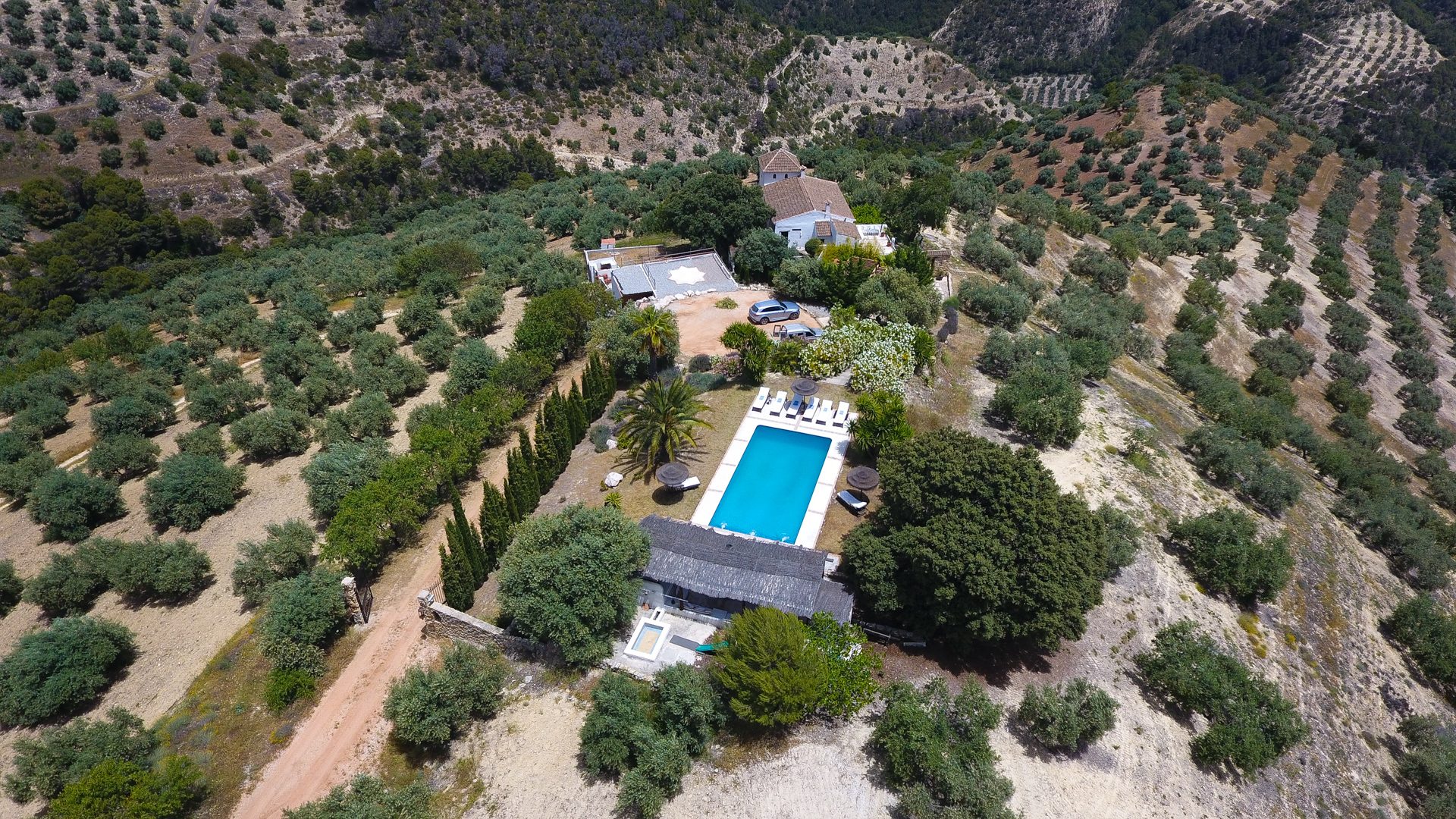
Cortijo Bujio is surrounded by olive country. Read on: The Great Olive Varieties, The free tapas of Granada and olive oil around Montefrío.
Sources: International Olive Council (table olives); Foods & Wines from Spain (ICEX) — Manzanilla, Gordal, Aloreña de Málaga PDO; on olive curing methods.