الزيتون
Travel guide
The sea of olives
The sea of olives
Drive east from Granada and the land begins to change. The hills fill with row upon row upon row of silver-green trees, marching in perfect lines over every slope to the horizon in every direction. This is the mar de olivos — the "sea of olives" — the largest man-made forest in the world, and one of the most extraordinary landscapes in Europe. It is the beating heart of the olive-oil story, and it lies just beyond the country around Cortijo Bujio.

The province of Jaén, in eastern Andalusia, is carpeted with something on the order of 60 million olive trees across more than half a million hectares. From a hilltop or a plane window, the effect is hypnotic: an endless, undulating grid of trees, each one planted at a measured distance, curving with the contours of the land. In spring the ground between them is green; in the dry heat of summer it turns ochre; at harvest, nets appear beneath every tree. It is agriculture on the scale of geography.
Jaén alone produces about half of all Spain's olive oil and close to a fifth of the entire world's — more than the whole of Italy. Its towns live and breathe the olive: the great harvest (the aceituna) each winter, the mills working day and night, the annual EXPOLIVA fair — the largest olive-oil event on Earth. The dominant tree here is the robust Picual, which gives Jaén's oils their trademark green, peppery, long-keeping character. (See The DOP Olive Oils of Andalusia.)
The sea of olives is not only beautiful; it made the region rich, and that wealth built two of the most perfect small cities in Spain. Úbeda and Baeza, rising from the olive plains, are jewels of Spanish Renaissance architecture — palaces, churches and squares of golden stone — and together are a UNESCO World Heritage Site. To wander Baeza's cathedral square and then look out over the endless groves is to understand how deeply oil and civilisation are entwined here.
The sea of olives lies within easy reach of Cortijo Bujio — a day's drive east takes you into the heart of Jaén, its groves, its Renaissance towns and its mills. Autumn visitors can watch the harvest; any time of year, the sheer scale of the landscape is unforgettable. Combine it with an olive-oil tasting to taste the very oil the land produces. (See olive oil around Montefrío and day trips from the villa.)
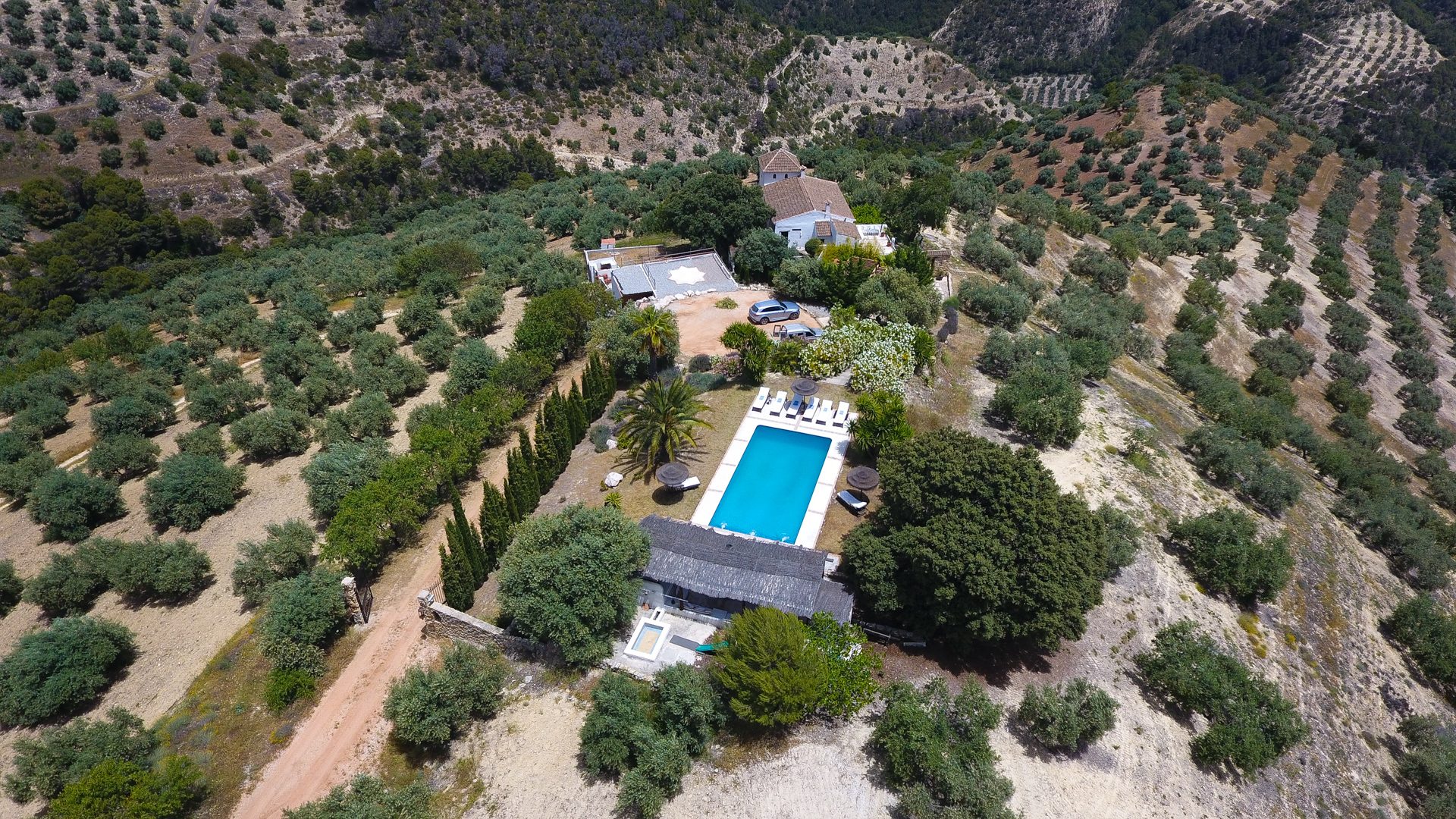
Look closer to home, too: the country around the villa, in the DOP Poniente de Granada, is its own smaller sea of olives — the same silver trees, the same ancient rhythm, framed by the Sierra Nevada. (See The History of the Olive.)
What is the "sea of olives"?
The vast, unbroken expanse of olive groves that covers the province of Jaén in eastern Andalusia — tens of millions of trees in ordered rows, often called the largest man-made forest in the world.
Why is Jaén so important for olive oil?
Jaén produces roughly half of Spain's olive oil and close to a fifth of the world's — more than any single country except Spain itself. Its dominant variety is the robust, peppery Picual.
What are Úbeda and Baeza?
Two beautiful Renaissance towns rising from the Jaén olive plains, built on the wealth of the oil trade and together a UNESCO World Heritage Site.
Can I visit the sea of olives from Cortijo Bujio?
Yes — the heart of Jaén is an easy day trip east, and the country around the villa, in the DOP Poniente de Granada, is a smaller sea of olives in its own right.
---
Cortijo Bujio sits within Granada's own olive country. Read on: The DOP Olive Oils of Andalusia, The History of the Olive and day trips.
Sources: Junta de Andalucía; UNESCO (Úbeda and Baeza); Foods & Wines from Spain (ICEX); on Jaén olive-grove statistics.