الزيتون
Travel guide
Olive varieties
Olive varieties
Wine has its grapes; olive oil has its varieties. Spain grows more olive cultivars than any country on Earth, and each has its own homeland, its own character and its own flavour in the bottle. Learning just a handful of names transforms the way you shop and taste — and most of the great ones grow within a couple of hours of Cortijo Bujio.

Picual is the king. Native to Jaén and dominant across eastern Andalusia, it is the most-planted oil olive in the world — on its own it accounts for around a quarter of all the olive oil produced anywhere. Its oil is robust and full-bodied, with notes of fig leaf, fresh grass and green tomato, a clear bitterness and a peppery kick. Crucially, it is extremely high in polyphenols, which makes it wonderfully stable and long-keeping. If you like a bold, healthy oil, look for pure Picual.
Hojiblanca ("white leaf") comes from the border country of Córdoba, Málaga and Seville — its heartland is around Lucena. It is Spain's great dual-purpose variety, good for both oil and table. Its oil is balanced and elegant: fresh grass, almond and banana, with gentle, well-integrated bitterness.
Arbequina, originally from Catalonia but now planted across Andalusia in modern hedgerow groves, is the soft one — smooth, buttery and sweet, with apple, banana and almond, and only a whisper of bitterness. It is low in polyphenols, so it is milder and less long-lived, but its easy charm has made it a global favourite.
Picudo (Picudo de Córdoba), from around Baena, is delicate and highly aromatic — almond, apple and tomato, sweet with little bitterness — a key variety in the celebrated Baena and Priego de Córdoba oils. Lechín de Sevilla gives fine, fluid, green oils across western Andalusia. Beyond the south, Spain's other great oil olives include Cornicabra (the robust, stable variety of La Mancha), Verdial (sweet and low in bitterness, around Málaga), Empeltre of Aragón, and Blanqueta and Farga of the Valencian east — the last famous for its thousand-year-old trees.
Other varieties are grown not for oil but for eating. Manzanilla de Sevilla ("little apple") is the world's leading table olive — meaty, firm and easy to pit and stuff, the classic green Spanish olive. Gordal Sevillana, the "queen olive," is prized for its sheer size — huge, crunchy and delicate. Aloreña de Málaga, the first Spanish table olive to earn a DOP, is cracked, brined and seasoned with thyme, fennel and garlic. Hojiblanca doubles as a table olive too, often cured into seasoned black olives. (See our guide to Table Olives.)
Some producers bottle a single variety (a monovarietal) to showcase its character; others blend — a splash of peppery Picual for backbone, sweet Arbequina or Picudo for roundness. Reading the variety on the label is the single most useful skill in choosing oil, because it tells you, before you ever taste, whether to expect the fire of Picual or the butter of Arbequina. (See How to Taste Olive Oil.)
The groves of the Poniente de Granada — the villa's own country — grow Picual, Hojiblanca, Picudo and the local Lucio, giving well-balanced, fruity oils. A tasting of local monovarietals is one of the best souvenirs of a stay. (See olive oil around Montefrío.)
What is the most important Spanish olive variety?
Picual, native to Jaén. It is the most-planted oil olive in the world and makes a robust, peppery, very stable oil high in healthy polyphenols.
Which olive oil is the mildest?
Arbequina — smooth, buttery and sweet, with apple and almond notes and very little bitterness. It is popular with people new to strong extra virgin oils.
What is a monovarietal olive oil?
An oil made from a single olive variety, bottled to showcase that variety's particular character, rather than a blend of several.
What are the big Spanish eating olives called?
The two most famous are Manzanilla de Sevilla (the classic firm green olive) and Gordal Sevillana, the extra-large "queen" olive.
---
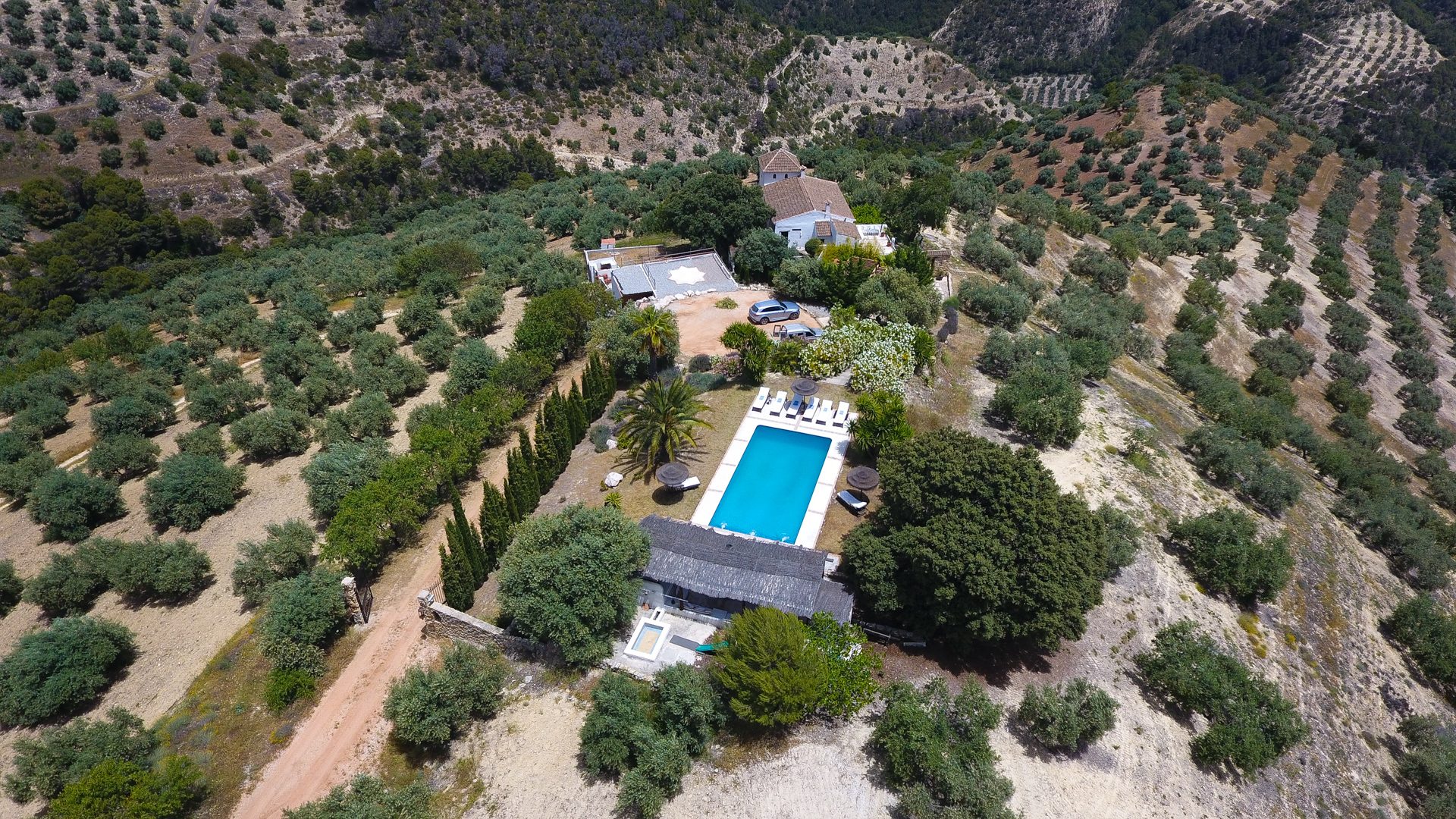
Cortijo Bujio sits among the olive groves of Granada. Read on: How Olive Oil Is Made, How to Taste Olive Oil, The DOP Olive Oils of Andalusia and Table Olives.
Sources: International Olive Council world catalogue of varieties; Oliveoilsfromspain.org; Foods & Wines from Spain (ICEX); Wikipedia (Picual; Arbequina).