الزيتون
Travel guide
Tasting olive oil
How to taste olive oil like a professional — fruity, bitter and pungent, the common defects, and how to read a label.
Most people have never really tasted olive oil — they have only cooked with it. Yet a great extra virgin oil is as complex as a fine wine, and learning to taste it takes about five minutes. Do it once and you will never look at a supermarket bottle the same way again. Here is how the professionals do it, what the flavours mean and how to decode a label.

Official tasters recognise only three positive attributes in an extra virgin oil — and, surprisingly, two of them sound like faults:
Bitterness and pungency are not defects to be tolerated; they are the marks of a young, well-made, polyphenol-rich oil. Bland is not better.
1. Pour a small amount into a little glass (tasters use blue glass so colour can't bias them — colour tells you nothing about quality).
2. Cup the glass in one hand and cover it with the other to warm it gently to body temperature.
3. Smell deeply — grass, tomato, almond, apple, green banana?
4. Sip a little, then draw air in over the oil through pursed lips ("strippaggio") to spread the aroma across your palate.
5. Notice the sequence: fruit first, then bitterness on the tongue, then the pungent kick in the throat as you swallow.
Trained panels also screen for defects, any of which disqualifies an oil from "extra virgin":
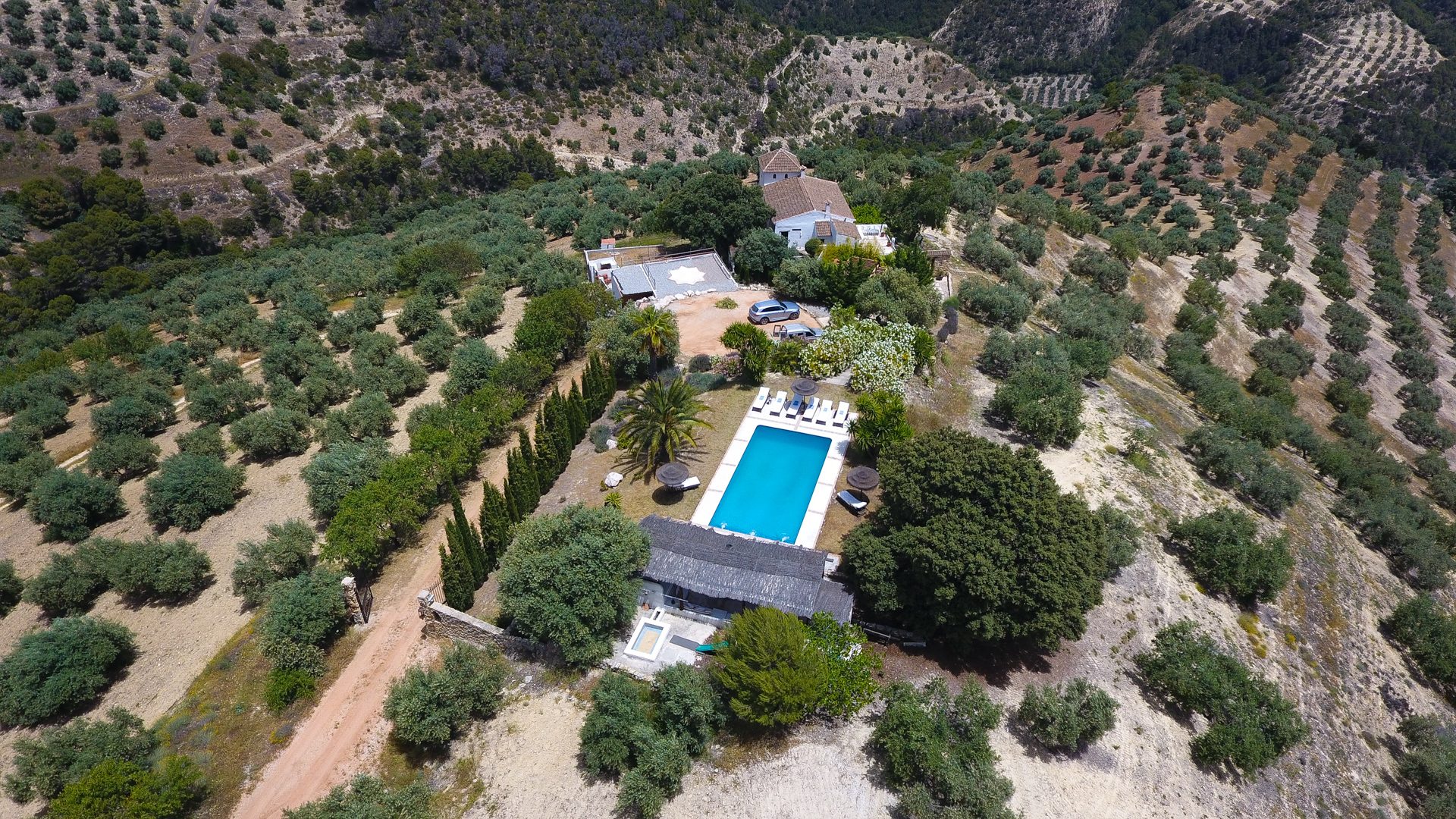
A guided olive-oil tasting — comparing a fiery Picual with a gentle Arbequina, straight and on warm bread — is one of the most memorable things you can do near Cortijo Bujio. (See olive oil around Montefrío.)
Why does good olive oil make me cough?
That peppery throat-sting comes from oleocanthal and other polyphenols — the antioxidants that make the oil both flavourful and healthy. A cough-inducing oil is a sign of freshness and quality, not a fault.
Are bitterness and pungency bad?
No — they are two of the three official positive attributes of extra virgin olive oil, along with fruitiness. They indicate a young, well-made, antioxidant-rich oil.
Does the colour tell me anything?
No. Professional tasters use coloured glasses precisely so colour can't mislead them. Green or gold, colour is not a measure of quality.
What should I look for on the label?
"Extra virgin," a recent harvest date, the olive variety, a named origin or DOP and dark glass or tin to protect the oil from light.
---
Cortijo Bujio is the perfect base for an olive-oil tasting. Read on: The Great Olive Varieties, How Olive Oil Is Made and Olive Oil & Health.
Sources: International Olive Council organoleptic method; UC Davis Olive Center; on oleocanthal and pungency.