التاريخ
Travel guide
Convivencia: myth & reality
Convivencia: myth & reality
For nearly eight centuries, Muslims, Christians and Jews shared the land you can see from Cortijo Bujio. What that coexistence actually meant is one of the most fiercely argued questions in all of history — and the honest answer is more surprising, and more human, than the popular myths on either side. This is the real story, told the way the best modern historians tell it.

Most people carry one of two opposite pictures of Al-Andalus in their heads.
The first is the romantic one: a lost paradise of tolerance, where three faiths lived side by side in harmony and built a golden civilisation together. The idea has a name — convivencia ("living together"), coined by the scholar Américo Castro — and its most beloved telling is María Rosa Menocal's The Ornament of the World.
The second is the hostile one: a story of conquest and subjugation, in which non-Muslims lived as second-class dhimmis under constant pressure, punctuated by massacre and expulsion — the version pressed, for example, in Darío Fernández-Morera's The Myth of the Andalusian Paradise.
Both, the evidence suggests, are distortions — each shaped as much by modern politics as by the medieval past.
The leading English-language historian of the subject, Brian A. Catlos, spends his book Kingdoms of Faith: A New History of Islamic Spain (2018) taking both myths apart. Al-Andalus, he writes, was "no Shangri-La of open-minded tolerance" — but the Christians and Berbers who ended it were not barbarians either. At the level of civilisations, he insists, there were no good guys and no bad guys.
What there was, instead, was pragmatism. Medieval Iberia was a world of shifting identities and unstable alliances, where religiously motivated hatred was usually outweighed by hard-headed self-interest and grudging tolerance. Conflict and cooperation across the religious line were driven by local agendas — power, money, survival — with religious language often added afterwards, to justify what interest had already decided. Some historians only half-jokingly rename it conveniencia — coexistence out of convenience, not principle.
You do not have to look far for proof, because so much of it happened in this region:
The lesson is not that people were tolerant, or that they were hateful. It is that the same society could be both, because both flowed from circumstance rather than from any fixed creed of coexistence.
These arguments are not only academic. The romantic version and the hostile version are both used as ammunition in today's debates about Islam, Europe and immigration. The value of the careful, evidence-based history — Catlos's above all — is that it refuses to serve either side. What it offers instead is a real, complicated, deeply human society: more tolerant than almost anywhere else in medieval Europe, and still a long way from a fairy tale. That truth is more inspiring than either myth — and it is written into the very stones around the villa.
What does convivencia mean?
Literally "living together" — the idea, coined by Américo Castro, that Muslims, Christians and Jews coexisted in medieval Spain. Historians debate fiercely how harmonious that coexistence really was.
Was Al-Andalus a paradise of tolerance?
No — but nor was it simply a story of oppression. The best modern scholarship, above all Brian Catlos, describes a pragmatic society of shifting alliances where cooperation and conflict alike were driven by self-interest, not by tolerance or hatred as such.
Who is Brian Catlos?
One of the leading historians of medieval Iberia, author of Kingdoms of Faith: A New History of Islamic Spain — a book that dismantles both the "paradise" and the "clash of civilisations" myths.
Why does this debate matter today?
Both myths are used in modern political arguments about Islam and Europe. The honest, evidence-based history resists easy use by either side.
---
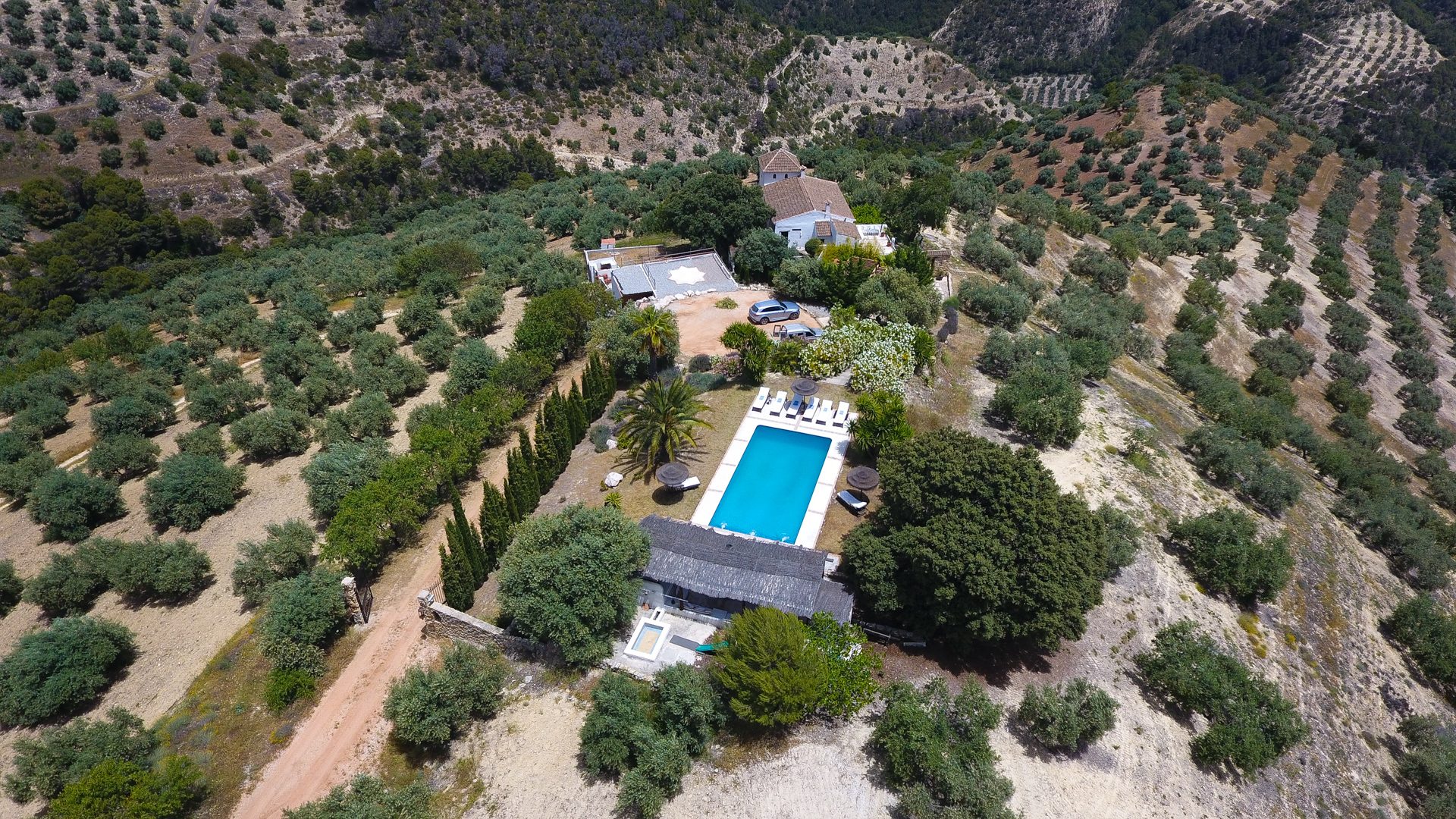
The countryside around Cortijo Bujio was this shared, contested world for centuries. Read on about Jewish Granada, Moorish Andalusia, the scholars of Al-Andalus and 1492.
Sources: Brian A. Catlos, Kingdoms of Faith: A New History of Islamic Spain (2018); María Rosa Menocal, The Ornament of the World; Darío Fernández-Morera, The Myth of the Andalusian Paradise; Américo Castro, España en su historia.