التاريخ
Travel guide
1492
1492
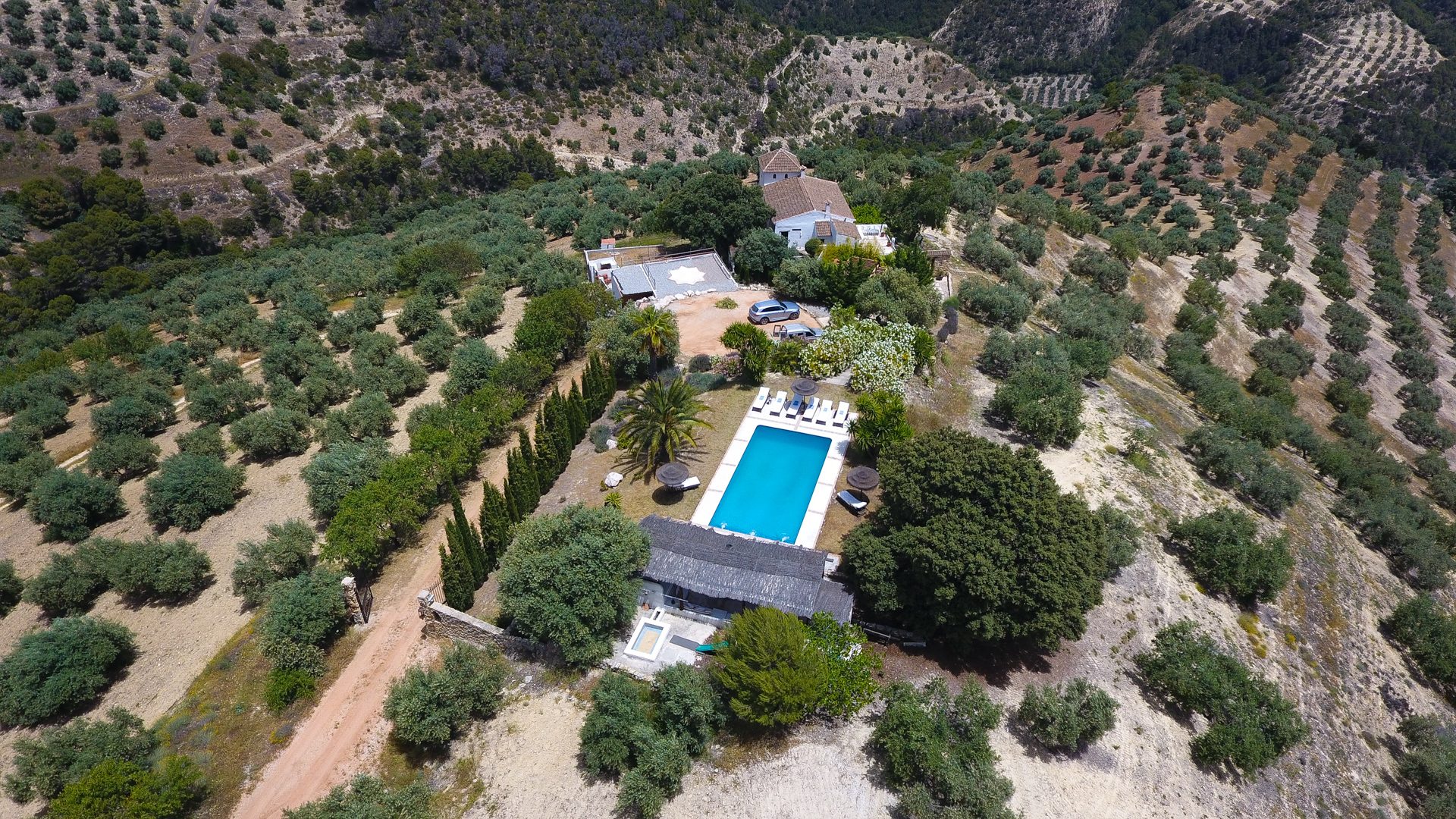
Most people know 1492 as the year Columbus sailed. Fewer know that the voyage, the fall of the last Muslim kingdom in Europe and the expulsion of Spain's Jews all happened within months of one another — and that all three were set in motion from the plain you can see from Cortijo Bujio. This small corner of Andalusia was, for one extraordinary year, the hinge on which world history turned. Here is how.

The drama did not begin in 1492 but a few years earlier, right on your doorstep. The castle-villages around the villa — Montefrío, Íllora, Moclín, Loja — were the fortified northern frontier of the Nasrid Kingdom of Granada. In the campaign of 1486, King Ferdinand took them one by one, tightening the ring around the city. When you climb the castle rock at Montefrío, you are standing where the final chapter of Al-Andalus began. (See our guide to the Granada frontier.)
On 2 January 1492, the last sultan, Muhammad XII, "Boabdil," handed the keys of Granada to Isabella of Castile and Ferdinand of Aragon. Nearly eight centuries of Muslim rule in Spain were over. The surrender terms — the Capitulations of Granada, promising (for a while) protection of Muslim religion and custom — had been negotiated in Santa Fe, a town on the plain west of Granada that the monarchs had built as a fortified camp during the siege. Legend says that as Boabdil rode into exile and turned for a last look at the city, he wept; the mountain pass is still called el último suspiro del moro, "the Moor's last sigh."
With the war won, the Catholic Monarchs finally had the money and attention for a Genoese sailor's improbable scheme. It was again at Santa Fe, in April 1492, that they signed the Capitulations of Santa Fe funding Christopher Columbus's first voyage. He sailed that August and made landfall in the Americas in October. The same little camp-town outside Granada launched both the end of medieval Muslim Spain and the beginning of the European age of empire.
The third act is the darkest. On 31 March 1492, in the newly conquered Alhambra itself, the monarchs signed the Alhambra Decree, ordering the expulsion of all Jews who would not convert to Christianity. Spain's Jewish community — the great Sepharad, among the oldest and most brilliant in the world — was given a few months to leave. Tens of thousands went into exile, beginning the Sephardic diaspora that carried Spanish-Jewish language and culture across the Mediterranean for five centuries. (See our guide to Jewish Granada and the Sephardic heritage.)
This was not coincidence. The completion of the Reconquista gave Isabella and Ferdinand — the "Catholic Monarchs" — the prestige, unity and resources to act on a single vision: one Spain, one faith. The same drive that ended Al-Andalus funded the Atlantic voyages and enforced religious uniformity at home. Three events we now treat as separate — the last medieval crusade, the discovery of the New World and one of history's great expulsions — were, to the people who ordered them, a single project. And its command centre was here, on the Vega of Granada.
1492 closed one of the most creative multi-faith societies of the Middle Ages and opened the modern world — for better and worse. It gave Spain an empire and a golden age; it also scattered the Sephardim, hardened the Inquisition and set in motion the colonisation of the Americas. Few places let you stand so precisely on the seam between the medieval and the modern.
All within about 45–60 minutes:
What happened in 1492 in Granada?
Three world-changing events converged: the fall of Granada (2 January), the last Muslim kingdom in Spain; the funding of Columbus's first voyage (signed at Santa Fe in April); and the Alhambra Decree expelling Spain's Jews (31 March). All were driven by the Catholic Monarchs and centred on Granada.
Where were the key documents signed?
The surrender of Granada and Columbus's contract were negotiated at Santa Fe, the monarchs' camp-town near Granada; the expulsion decree was signed in the Alhambra.
Why is 1492 called the year that changed the world?
It ended nearly 800 years of Al-Andalus, began European contact with the Americas and triggered the Sephardic diaspora — the medieval world closing and the modern one opening, all at once.
Can I visit these places from Cortijo Bujio?
Yes — Santa Fe, the Royal Chapel and the Alhambra in Granada are about 45–60 minutes away, and the frontier castles of Montefrío, Íllora and Moclín are even closer.
---
Cortijo Bujio overlooks the plain where 1492 was decided. Read on about Jewish Granada, Moorish Andalusia, the Granada frontier and Granada & the Alhambra.
Sources: Encyclopædia Britannica ("Granada, Kingdom of"; "Alhambra Decree"; "Christopher Columbus"); Brian A. Catlos, Kingdoms of Faith; L. P. Harvey, Islamic Spain, 1250 to 1500.