التاريخ
Travel guide
Medina Elvira
Medina Elvira
Before there was Granada, there was Ilbira. Out on the Vega below Cortijo Bujio, buried under olive groves near the town of Atarfe, lie the streets and houses of a whole Islamic city that vanished a thousand years ago — the forgotten mother-city from which Granada was born. It is one of the most important and least-visited archaeological sites in Andalusia, and its story ties together threads that run all through this region.

Madīnat Ilbīra (Medina Elvira) was founded around the 9th century, at the foot of the Sierra Elvira near modern Atarfe, over older rural settlements. Through the Emirate and the great Caliphate of Córdoba it grew into the capital of the Cora de Elvira — the administrative district that stretched across what is now Granada, and into Málaga, Jaén, Córdoba and Almería. Its population was a true cross-section of Al-Andalus: Arabs, Muladíes (converts), Berbers and Mozarabs (Christians under Muslim rule) living side by side.
And there is a deeper connection, one that reaches all the way to Syria. This district was the land settled, back in the 740s, by the jund of Damascus — the Syrian soldiers who chose the green Vega because it reminded them of home. Ilbira was, in a real sense, the capital of the "Damascus of the West." (See our guide to the Granada frontier and the road from Damascus.)
Every city has a founding moment; Granada's was the death of Ilbira. When the Caliphate of Córdoba collapsed into civil war (the fitna) in the early 11th century, the incoming Berber Zirid rulers looked at the open, hard-to-defend plain around Ilbira and decided they needed higher ground. They moved their capital to the fortified hill of Gharnāṭa — Granada — and, in or around 1013, relocated Ilbira's inhabitants there. The old city on the plain was abandoned; the new city on the hill became the seat of the independent kingdom of Granada. One city died so that another could be born.
Here is what makes Medina Elvira so precious. Because almost nothing was ever built on top of it, the ruins survived where most Andalusian towns were buried under later cities. Archaeologists have uncovered streets, houses, a sophisticated water system, a mosque and a large necropolis spread across some 300 hectares — now mostly beneath olive trees. The site was rediscovered in the 19th century and is still being excavated today. To walk it is to stand in an ordinary Islamic town of a thousand years ago, the kind of place the great palaces and mosques depended on but that history usually erases.
The city vanished, but its name did not. It survives in the Sierra Elvira, in the old Cora de Elvira, and even in Granada's own Puerta Elvira, the great gateway named for the road that once led to the lost capital. Every time you see the word "Elvira" on a map around Granada, you are reading the ghost of a city that has been empty for a thousand years.
The archaeological site of Madīnat Ilbīra lies near Atarfe, about 15 minutes from Granada and roughly 40 from Cortijo Bujio — an easy add-on to a Granada day. Check current opening arrangements before you go, as access to the excavations can be limited; the town of Atarfe also has an interpretation of the site. Pair it with the Alhambra and the Realejo for the full arc: the city that was, the city that became and the palace that crowned it all.
What is Medina Elvira?
Madīnat Ilbīra, an Islamic city founded around the 9th century near Atarfe, at the foot of the Sierra Elvira. It was the capital of the Cora de Elvira before Granada existed.
How is it connected to Granada?
When the Caliphate collapsed, the Zirid rulers moved to the defensible hill of Gharnāṭa (Granada) and, around 1013, relocated Ilbira's people there. Ilbira was abandoned and Granada was founded in its place.
Why is the site important?
Because so little was built over it, its streets, houses, water system and necropolis survive unusually well — a rare, well-preserved snapshot of an ordinary Al-Andalus town.
Can I visit?
Yes — the site is near Atarfe, about 40 minutes from Cortijo Bujio and 15 from Granada, though access to the excavations can be limited, so check ahead. It pairs well with a day in Granada.
---
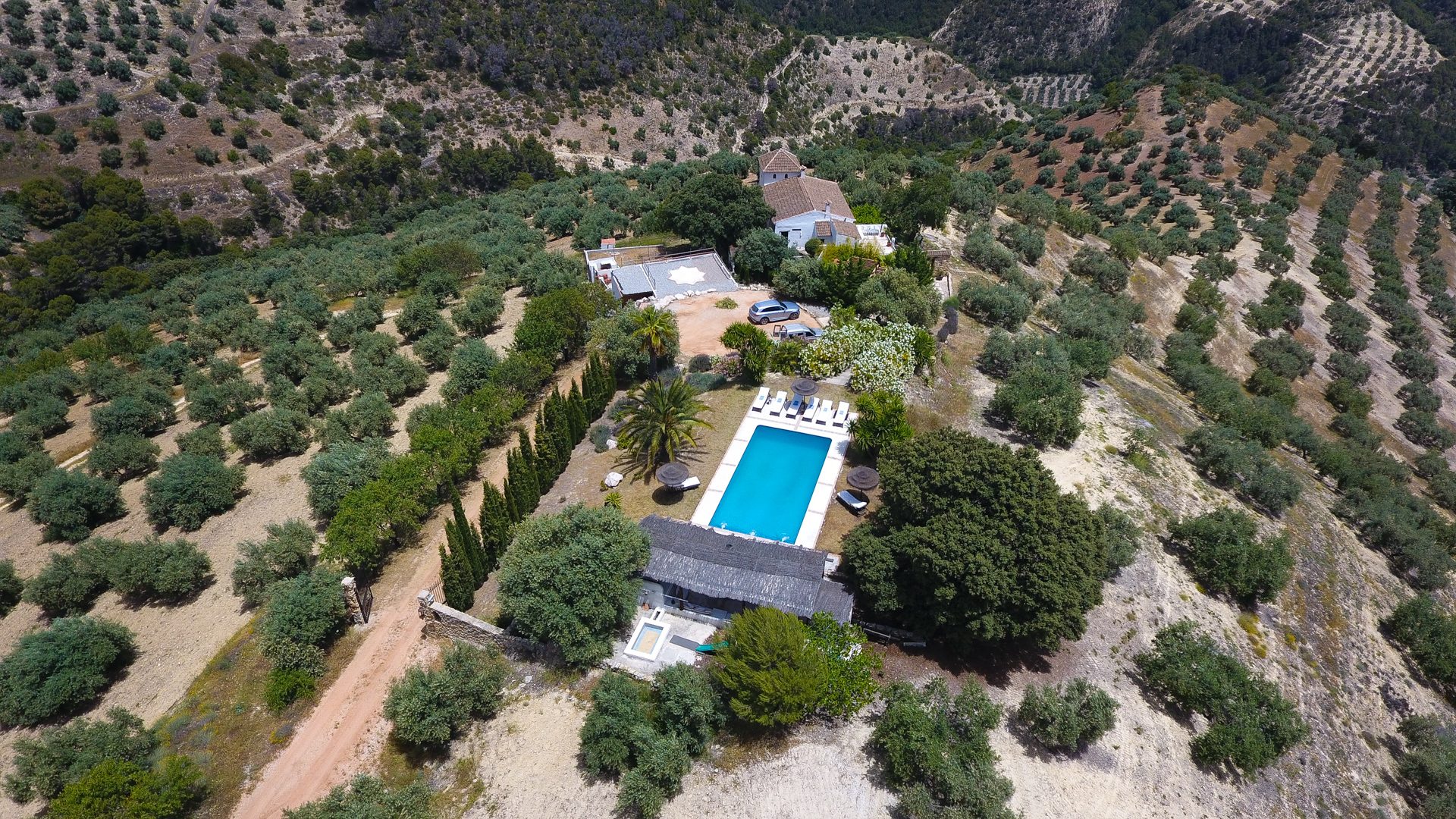
Cortijo Bujio overlooks the Vega where Granada was born. Read on about the Granada frontier and the road from Damascus, Moorish Andalusia, Granada & the Alhambra and convivencia — myth and reality.
Sources: Madinat Ilbira, Wikipedia; Proyecto Medina Elvira and Universidad de Granada archaeological reports; "Archaeological research on Madīnat Ilbīra – an Umayyad town in al-Andalus."