المناظر
Travel guide
Sierra Nevada & Alpujarras
Sierra Nevada & Alpujarras
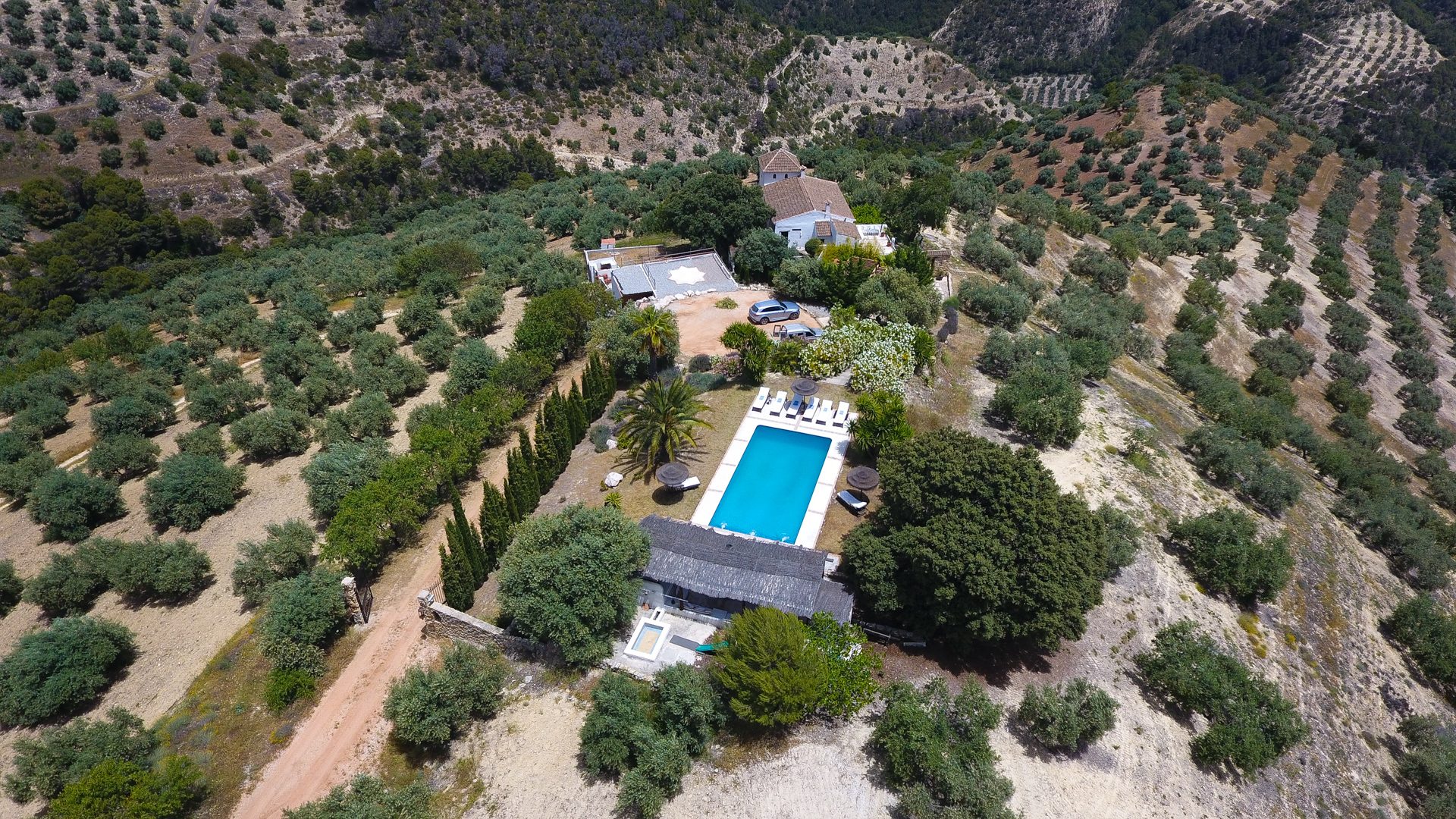
From the terrace at Cortijo Bujio you can see them on the horizon: the snow-capped peaks of the Sierra Nevada, mainland Spain's highest mountains. Beneath them, on the range's southern flank, lies one of the most magical corners of Andalusia — Las Alpujarras, a world of white villages, terraced valleys and thousand-year-old irrigation channels, where the last of Moorish Spain lingered longest. Together they make one of the great day trips from the villa.

The Sierra Nevada holds superlatives. Mulhacén, at 3,479 metres, is the highest peak on the Iberian Peninsula. The ski resort on its slopes is the southernmost in Europe and one of the sunniest, running roughly from December to late April. And it offers a genuinely rare boast: on the right spring day you can ski in the morning and swim in the Mediterranean in the afternoon, with the coast little more than an hour away. (See our guide to the Costa Tropical.)
In the warmer months the same range becomes a paradise for walkers, with trails from gentle valley strolls to the ascent of Mulhacén itself, and a national park protecting rare high-mountain plants and wildlife.
Drop over the southern side of the mountains and you enter Las Alpujarras — a string of dazzling white villages clinging to steep, green valleys. The most famous cluster hangs above the dramatic Poqueira gorge: Pampaneira, Bubión and Capileira, stacked one above the other, their flat-roofed, box-like houses and covered passageways looking more like North Africa than the rest of Spain. That is no accident.
The Alpujarras are where the story of Al-Andalus quietly ended. After the fall of Granada in 1492, Boabdil, the last sultan, was granted a small domain here before leaving for exile. The region's Moriscos — Muslims forced to convert — held on to their language, dress and customs longer than anywhere, until a great rebellion in 1568–71 was crushed and they were expelled. The villages they built remain: the flat clay roofs, the terraced fields and above all the acequias — the network of irrigation channels, first dug by Moorish farmers over a thousand years ago, that still carry snowmelt from the peaks down to the orchards today. To walk the Alpujarras is to walk through living Al-Andalus. (See our guide to Boabdil.)
The Alpujarras and the high Sierra Nevada are roughly 1.5–2 hours from Cortijo Bujio — a full, rewarding day out, and utterly different in feel from the olive country around the villa. Combine the white villages with a mountain walk, or, in winter and spring, mix a morning on the slopes with an afternoon by the sea.
How high is the Sierra Nevada?
Its highest peak, Mulhacén, reaches 3,479 metres — the highest on mainland Spain. The range holds Europe's southernmost ski resort.
Can you really ski and swim on the same day?
Yes. On a spring day you can ski in the Sierra Nevada in the morning and reach the Mediterranean beaches of the Costa Tropical, a little over an hour away, by the afternoon.
What are Las Alpujarras?
A region of white villages on the southern slopes of the Sierra Nevada — flat-roofed, North African in feel, famous for their Moorish irrigation channels, cured ham and woven rugs, and as the place where Moorish Spain endured longest.
How far is it from Cortijo Bujio?
About 1.5–2 hours by car — a memorable full-day trip.
---
Cortijo Bujio looks out towards the Sierra Nevada. Read on about the Costa Tropical, the best day trips, Boabdil and Montefrío.
Sources: Sierra Nevada National Park; Wikipedia, "Mulhacén" and "Las Alpujarras"; Andalucía.org on the Alpujarras and Trevélez.