Montefrío · Andalusia · Spain
الحمراء
In depth

The Alhambra — The Deep Guide

A deep narrative guide to the Alhambra: history, tragedies, legends and the hidden world behind the palace.
Guides › Alhambra
The Alhambra and the Alcazaba
Foto: Alhambrayalcazaba · Wikimedia Commons

1Historical context: Andalusia, Granada and the paradox of the Nasrids

الأندلس · غرناطة · الحمراءal-Andalus · Gharnāṭa · al-Ḥamrāʾ

Chronology

  • 711 The Muslim conquest of Hispania; the beginning of al-Andalus.
  • 756–1031 The Emirate and Caliphate of Córdoba; the most brilliant period.
  • 1031 Collapse into the Taifa kingdoms; al-Andalus fragments.
  • 1212 Las Navas de Tolosa — the decisive engagement; Almohad power gives way.
  • 1232/1238 Muhammad I Ibn al-Ahmar establishes the Nasrid kingdom of Granada.
  • 1248 Muhammad I helps Ferdinand III to take Seville — the greatest paradox in Nasrid history.
  • 1333–1492 The zenith and the decline of the Nasrid kingdom; construction of the Alhambra we see today.
  • 1492 The surrender of Granada. Columbus sets sail. One world ends, another begins.

In 1248 Muhammad Ibn al-Ahmar, ruler of the still youthful emirate of Granada, did something that many of his Muslim contemporaries regarded as treachery. He rode at the side of King Ferdinand III of Castile against Muslim Seville. He brought troops. He helped to defeat the most magnificent city of the Islamic world on the Iberian Peninsula.

Legend tells of what happened next: when Muhammad returned to Granada, the people of the city streamed out to meet him and hailed him as al-Ghālib bi-llāh — “the Victor by the grace of God”. He, however, is said to have quietly refused the acclaim: “wa-lā ghāliba illā llāh” — there is no victor but God. Whether the words were ever spoken in that form, nobody knows; the anecdote is legend, not chronicle. All that is documented is what came of it: the motto of the Nasrid dynasty. It stands on every wall of the Alhambra, repeated a hundredfold in stucco and tile. The most beautiful building of the Islamic West carries as its motto a sentence born of an act of political accommodation that some called betrayal.

That is Granada. Beauty and compulsion. Conviction and survival. The Alhambra does not lie — it shows the truth, but only if you look closely.

★ The detail worth marvelling at

The name al-Ḥamrāʾ — “the red one” — has never been fully explained. One theory: the walls really do glow red-orange in the last light of evening, because the lime was mixed with local iron ochre. Another: the first Nasrid buildings were raised at night by torchlight — the construction of a rule that secures by night what it cannot defend by day. Which explanation is correct? Possibly both.

Understanding the paradox

Granada was the only Islamic principality to survive the Reconquista — not through military strength, but through flexibility, tribute and geopolitics. The Nasrid kingdom lasted 260 years — from 1232 to 1492 — and thereby outlived the last other Islamic power on the peninsula by almost 250 years: with the collapse of Almohad rule around 1248, Granada stood alone. It paid a high price for this: regular tribute to Castile, occasional military assistance to the Christian enemy, a life lived in permanent emergency.

The Alhambra is the built answer to that condition. Every inscription, every play of water, every calligraphic wall says: we have not fallen. We flourish. God is with us. The beauty is not a distraction from the politics — it is the politics.

The guiding thesis of this whole guide: the Alhambra is architecture under existential pressure. Its beauty is not decoration but an argument. The argument runs: this rule is ordered, blessed and unconquerable — even while it negotiates with Castile every day.
ArabicTransliterationMeaning
ولا غالب إلا اللهwa-lā ghāliba illā llāhThere is no victor but God — the dynastic motto of the Nasrids
بنو نصرBanū NaṣrThe Nasrids; “sons of Nasr”
مملكة غرناطةMamlakat GharnāṭaThe Kingdom of Granada
الحمراءal-Ḥamrāʾthe red one — Alhambra
“Granada was not the romantic last remnant of al-Andalus. It was a highly compressed frontier state under relentless stress. The Alhambra is its answer to that stress: walls against fear, water against drought, script against doubt and beauty against political impermanence.”
The entrance to the Alhambra

2The entrance: the gate as an instrument of power

باب الدخول · تل السبيكة · الساقية الكبرىBāb al-dukhūl · Tall al-Sabīka · al-Sāqiya al-Kubrā

The hill as a decision

The Sabika hill is no accidental choice. It stands higher than the Albaicín opposite, it has steep slopes to the north and south, and it lies in such a way that from it one can survey the entire Vega — the fertile plain around Granada. The first Nasrid ruler, Muhammad I, chose it not for its beauty but for its strategic logic. What followed was that beauty and strategy shared the same address for 260 years.

★ The detail worth marvelling at: the Acequia Real

The Alhambra consumes enormous quantities of water — for fountains, baths, gardens, kitchens and drainage. That water comes from the Río Darro, which flows past directly at the foot of the Alhambra hill. It is not tapped down there, however, but some six kilometres upstream, at a weir — the Presa Real — that lies as high as the palace city itself, or higher. From there the Acequia Real (الساقية الكبرى) carries the water for around six kilometres along the right bank of the Darro, largely as an open channel, and downhill the whole way: by gravity alone, without pumping station, without machinery. Nothing flows uphill here — nor could it. The real feat is the gradient itself: held so evenly and so imperceptibly across six kilometres that the water neither stands still nor races away, but arrives at the top where it is needed. This channel, laid out in the thirteenth century and still partly in operation today, is one of the most underrated technical achievements of the Middle Ages.

Basic principle: the Alhambra never shows everything at once. It works through approach, delay and controlled thresholds. The modern entrance with its timed slots and QR codes is, historically speaking, not so very different from the original system: access is always hierarchy.
“Before we have so much as seen the first palace, we experience the founding principle of the Alhambra: access is regulated. Who may enter, how far he gets and what he sees — that, here, is part of power.”
The medina of the Alhambra
Foto: Murallas de la Medina, la Alhambra 01 · Wikimedia Commons

3The medina: the invisible city behind the palace

المدينة · الحرف · الساقيةal-Madīna · al-Ḥiraf · al-Sāqiya

What the palace conceals

The Alhambra was not a palace complex — it was a complete city. In the fourteenth century an estimated 2,000 to 3,000 people lived and worked here permanently: merchants, smiths, potters, saddlers, carpenters, scribes, scholars of the written word, soldiers, cooks, physicians, poets, women musicians, enslaved women, free servants and administrative officials.

The foundations of a mosque, of a Qur’anic school (madrasa), of baths, of a market and of numerous craft workshops have been found. We even know a few names: documents from the fourteenth century name certain masters who worked at the Alhambra. The beauty of the Court of the Lions was created by hands whose owners have been forgotten by name.

★ The detail worth marvelling at: where the tiles came from

The characteristic alicatados — the geometric ceramic tiles — do not come from a single city. Sources from the year 1240 record tile production in three places at once: in Almería, in Málaga and in Granada itself. And on the grounds of the Alhambra, in the area of the Secano, excavations have uncovered ceramic workshops — so part of the material was made exactly where it was laid, a few hundred paces from the wall it was to adorn. Málaga was one workshop city among several. It was famous for something else: the loza dorada, the gold-lustre ceramic whose bowls and vases were traded as far as Egypt and England. That was luxury tableware, not wall tile. Anyone touching an alicatado today is not touching a long journey but a division of labour: clay from nearby, skill from several cities, laid by hands that left no signature.

A deeper thought — stage and backstage: the Nasrid palaces are the stage; the medina is the backstage area. Without masters of water, no fountains. Without scribes, no diplomacy. Without gardeners, no paradise. Beauty is always infrastructure as well.
“The medina is the part many people overlook. But the truth of every palace culture is lodged here: the most beautiful rooms were made possible by the most invisible people — and today, all the same, we shall not forget them.”
★ The detail worth marvelling at: the Alhambra struck its own coins

The medina housed a mint of its own — the Dār al-Sikka. Nasrid gold dinars and silver dirhams were struck here. Some of these coins survive and can be seen in museums today. They bear the name of the reigning sultan and frequently the dynastic formula wa-lā ghāliba illā llāh. Which means: the motto that paves the walls of the Alhambra also circulated through the markets of Granada, through merchants’ hands, through the purses of craftsmen and farmers. It was not merely wall decoration — it was the face of the currency. When the last coins were struck here, shortly before 1492, the minters may well have known what was coming.

† The library and the burning of the books

The Alhambra had a library and scriptoria. Manuscripts were copied here, poems composed, state documents drawn up. Ibn al-Khaṭīb — the chancellor-poet later destroyed by his own pupil — wrote parts of his works in the Alhambra. We know of specific manuscripts that go back to the Nasrid period and that today lie in Moroccan, Spanish and European libraries.

What became of the library after 1492 is one of the most painful chapters in Andalusian history. On 20 November 1499 Archbishop Francisco Jiménez de Cisneros had thousands of Arabic manuscripts burned on the Bib-Rambla square in Granada. He himself boasted of having destroyed 5,000 books — other estimates run far higher. What was saved was saved by private families, by Moroccan merchants and by individual humanists who recognised its worth. What was not saved is gone for ever: poems nobody knew. Medical treatises. Legal opinions. History. Voices.

The Palacio de Carlos V

4Palacio de Carlos V: the empire overwrites the memory

قصر شارلكان · الفناء الدائريQaṣr Shārlakān · al-Fināʾ al-Dāʾirī

The occasion: a wedding in Granada

In 1526 the Emperor Charles V came to Granada on his honeymoon with his newly married Portuguese queen, Isabella. They stayed in the Nasrid palaces. Charles is said to have been so impressed by the Alhambra that he remarked: “How unfortunate the man was who lost all this.” Shortly afterwards he commissioned the construction of his own palace — set right into the middle of the Nasrid ensemble, sacrificing parts of the summer palace and other buildings in the process.

† What was destroyed

For the building of the Palace of Charles V, parts of the Nasrid palace complex were demolished. The sources name, among others, the so-called “Palacio del Partal Alto” and the passages connecting various areas. Nobody knows exactly what was lost. The palace that is regarded today as an alien body came into being through the erasure of something we shall never see again.

★ The detail worth marvelling at: 110 years of building site — and 330 years without a roof

The Palace of Charles V was never completed in one go. Two figures must be kept apart here. The first: building began in 1527, and work continued with long interruptions until it was abandoned for good in 1637 — some 110 years of construction. The second: after that, nothing happened for three hundred years. From 1637 to 1967 the palace meant to represent the mightiest monarchy in Europe stood without a roof — roughly 330 years open to the sky. Only in 1967 was the roofing finished. Charles V himself died in 1558, without ever returning. The square-and-circular manifesto of empire thus lay in the rain for longer than it was ever built — right beside the completed masterpiece of the Nasrids.

A deeper thought: preservation can be appropriation. Charles V did not destroy the Alhambra — he absorbed it. And that is sometimes worse than destruction: the monument remains, but its meaning is overwritten.
“The Palace of Charles V does not stand here by chance. It is a sentence made of stone: the new power does not take just any place — it takes the old seat of power and builds itself on top of it.”
The Alcazaba
Foto: Alcazaba, Alhambra, Granada, Spain · Wikimedia Commons

5The Alcazaba: bells, blood and the day that changed the world

القصبة · برج الحراسة · برج الوداعal-Qaṣaba · Burj al-Ḥirāsa · Burj al-Wadāʿ
  • 9th/10th c. Earlier fortifications on the Sabika hill.
  • 1238 onwards Muhammad I systematically develops the military core.
  • 2 January 1492 The first Christian banner is raised on the Torre de la Vela.
  • 1812 Napoleonic troops blow up several towers of the Alcazaba.

The morning of 2 January 1492 was cold and clear. Sultan Boabdil had left the Alhambra the night before — secretly, to avoid unrest — and was waiting on the plain outside the city for the arrival of the Spanish Queen Isabella and King Ferdinand. On the stroke of nine, those in the valley saw a silver banner of the cross rise into the morning light on the highest point of the Torre de la Vela. Then the glint of a silver cross. Then, after a moment of silence, all the bells began to ring.

Somewhere in the crowd watching the spectacle from the plain stood a Genoese seafarer named Cristóbal Colón — Christopher Columbus. He was waiting for an audience with the monarchs. A few months later he would put to sea. Three worlds touched on that morning: the end of al-Andalus, the triumph of the Reconquista and the beginning of European expansion into the New World.

★ The detail worth marvelling at: the bell as a water clock

The Torre de la Vela — the “watchtower” — carried a great bell that rang not primarily for prayer but to regulate the rhythm of irrigation across the whole Vega de Granada. Every farmer in the fertile plain around Granada knew: when the bell rings, his stretch of the irrigation channel is open. That bell determined the food, the growth, the survival. After the surrender of Granada the Spaniards took over not merely the fortress — they took over the nervous system of local agriculture. To this day the bell rings every year on 2 January in memory of the Conquista.

A deeper thought: the Alcazaba is more than defence. It is the ruler’s eye over the city and the nervous system of an agricultural society. From here you can see everything — and everything sees it.
“From up here, on this tower, on the morning of 2 January 1492, a civilisation ended. Columbus stood in the crowd. The bell that still rings on this date every year is not a peal of triumph — it is also a requiem.”
† Muhammad IV — struck down by his own troops

Muhammad IV (1325–1333) came to the throne not as a teenager but as a child: born on 14 April 1315, he was ten years old when his father Ismail I was murdered and rule passed to him. He grew up in office and became an energetic, militarily active ruler. His most formidable force was a corps that was no Granadan invention: the Ghuzāt, the “volunteers of the faith” — North African, predominantly Marinid Muslims who came across the strait as warriors of the faith and became a political power in their own right in Granada. Their commanders, the house of the Banū Abī l-ʿUlā, soon behaved at court like a second dynasty alongside the first.

In the summer of 1333 Muhammad IV led his troops to Gibraltar. In June he took the fortress from the Castilians; Alfonso XI advanced and laid siege to it in his turn. A truce ended the siege — and a day later, on 25 August 1333, the sultan was struck down near the mouth of the Guadiaro. The killers were not Christian mercenaries but the sons of ʿUthmān ibn Abī l-ʿUlā: Muslim commanders of the very Ghuzāt corps on which he had relied. He was eighteen years old.

The background remains unclear to this day: fear among the Ghuzāt leaders of an understanding between their sultan and Castile, a quarrel over power and pay, a personal feud? We do not know. What remains: a ruler who came to the throne at ten and at eighteen was killed by the men who were meant to guard his frontier. He was succeeded not by a son but by his brother Yusuf I, the third son of Ismail I — the same Yusuf who would later be murdered at prayer and who drove the Banū Abī l-ʿUlā out of Granada in revenge.

★ The detail worth marvelling at: almost half the Nasrid rulers were murdered or deposed

The Nasrid dynasty ruled Granada from 1232 to 1492 — 260 years, an extraordinary lifespan for a small Islamic state under the pressure of the Reconquista. In those 260 years, 23 sultans reigned — which works out at an average reign of about eleven years. Of those 23, at least nine were violently deposed or killed: murder, palace coup, poisoning or forced abdication. Others were raised to the throne and toppled again more than once. The Alhambra is not only a monument to beauty — it is also the headquarters of a rule that had to defend itself permanently against itself. The walls that today receive tourists in silence have borne the footsteps of men who knew that their death might be waiting in the room they were just entering.

The Mexuar
Foto: Sala interior de l'Alhambra · Wikimedia Commons

6The Mexuar: law, administration and a murder at prayer

المشور · دار الحكم · ولا غالب إلا اللهal-Mashwar · Dār al-Ḥukm · wa-lā ghāliba illā llāh

Where rule is administered

The Mexuar is the room in which Nasrid rule was not celebrated but conducted: audience, jurisdiction, administration and counsel. Subjects presented themselves here, verdicts were pronounced, dignitaries received their instructions. The room was greatly altered by Christian rebuilding after 1492 — what we see today is a palimpsest: Islamic architecture overlaid with the function of a Christian chapel and with modern restoration.

† The death of Yusuf I — murdered at prayer

Yusuf I (1333–1354) was one of the ablest and most cultivated rulers in Nasrid history. He built the Comares Tower, the Puerta de la Justicia and the main entrance to the Alhambra — everything that impresses most goes back to him. He was a poet, he was devout, he was a statesman.

19 October 1354 was not just any day of Ramadan. It was 1 Shawwal — the feast of the breaking of the fast, ʿĪd al-Fiṭr, the day after the end of Ramadan, the brightest day in the community’s year. Yusuf I led the festival prayer, and did so not in the mosque of the Alhambra but down in the city, in the Great Mosque of Granada, in full view of everyone. During the final prostration a man rushed at him and stabbed him. The sultan was carried up to his chambers in the Alhambra; there he died.

The assassin was struck down on the spot by the crowd. Who he was remained unresolved: the sources report that his speech was unintelligible and describe him as a madman — and there, in essence, historiography has remained. No motive was ever established, no instigator ever proven. For the obvious suspicion that a court faction commissioned the deed in order to put Muhammad V on the throne there is no evidence; it is a narrative that makes the senselessness easier to bear. What remains: the man who created the most beautiful buildings of the Alhambra was stabbed before the assembled city — at prayer, on the day of joy, probably by a deranged man, for no reason we shall ever learn.

★ The detail worth marvelling at: the omnipresent formula

The inscription ولا غالب إلا اللهwa-lā ghāliba illā llāh — appears in the Alhambra more than 9,000 times. It stands on walls, floors, ceilings, columns, window frames, fountains and gate lintels. It is the most frequent written element in the entire complex. No other Islamic building carries a single inscription so often. This is not pious ornament — this is a political obsession.

“In the Mexuar, power goes to work. It judges, it writes and it legitimises itself — with a formula that arose from a moment of political humiliation and became the soul of this architecture.”
The Cuarto Dorado
Foto: Patio del Cuarto Dorado - 021 · Wikimedia Commons

7Cuarto Dorado / the Comares façade: the wall as politics

الغرفة المذهبة · واجهة قمارشal-Ghurfa al-Mudhahhaba · Wājihat Qumāriš

Three languages on one wall

The Comares façade is one of the densest political surfaces in Islamic architecture. Anyone who takes the time to read it properly — from bottom to top, from the ceramic tiles across the body of stucco to the wooden ceiling — grasps that it consists of three parallel languages speaking at once: geometry (the order of the world), plant ornament (vitality, growth, paradise) and calligraphy (rule and God).

★ The detail worth marvelling at: stucco is not stone

What looks like marble is almost always stucco — a mixture of gypsum, water and organic binders, cut and modelled while damp before it hardened. The Nasrid craftsmen developed techniques in which several layers of stucco were worked one over another, so that the surface creates a three-dimensional depth of sometimes less than 5 centimetres that reads like a relief of 30 centimetres. The material was cheap; the skill was priceless.

A deeper thought: the Alhambra replaces monumentality with intensity. It does not say “I am large” — it says “I am inexhaustibly legible.” That is a fundamentally different language of power from Gothic cathedrals or Egyptian temples.
“This wall is not a background. It is a curtain, a text, an ornament and a demonstration of power all at once — and all of it made from a material softer than the scratch of a fingernail.”
The Court of the Myrtles

8The Comares Palace / Court of the Myrtles: diplomacy in the mirror

قصر قمارش · فناء الريحان · بركة الريحانQaṣr Qumāriš · Fināʾ al-Rayḥān · Birkat al-Rayḥān
  • 1333–1354 Yusuf I builds the Comares Tower and the core complex.
  • 1354–1391 Muhammad V adds to it and completes it.
  • 1890 A fire damages adjoining areas; restoration follows.

A Castilian ambassador enters the Court of the Myrtles for the first time. He comes from a world of stone, massive walls, tapestried halls and candlelight. Here he is met by: a long mirror of water, so still that the façade of the Comares Tower appears twice — once in stone, once in the water. The scent of myrtle. The trickling. The silence. He walks the entire length of the pool, with the sultan at the far end, standing in a gateway, waiting. Every step the ambassador takes is calculated: he needs 40 paces to arrive. Forty paces in which he has time to marvel, to fear and to grasp that this court was not built by a weak power.

We know of several Castilian and Aragonese embassies that were received here. And we know that ambassadors also set out in the opposite direction — from here, as far as Cairo and to the court of the Ottomans. The Court of the Myrtles has seen world history.

★ The detail worth marvelling at: myrtle as keeper of state secrets

The myrtle hedges (arrayanes) are not decorative — they are technical. Myrtle holds moisture, cools the air, casts shade on the water and prevents algae from forming in the pool. The scent of myrtle — slightly bitter, resinous — was deliberately chosen: in Islamic garden culture myrtle stands for purity and longing for the world to come. The small white myrtle blossoms were held to be plants of paradise. The diplomats were thus led, quite literally, into a model of paradise.

“The pool is the sultan’s quietest propagandist. It says nothing — and doubles his power all the same.”

People like to tell of Byzantine envoys who came to the Alhambra to ask for help against the Ottomans. There is no source for this. What is documented is the movement in the opposite direction — and it is the better story, because it is true.

In 1487 Málaga fell. The ring around Granada closed, and the last Islamic state in Europe was running out of time. In that year the Nasrids did what the besieged do: they sent ambassadors — not north, but east. A Granadan embassy went to the court of the Ottomans and to that of the Mamluks in Cairo and asked for military help against Castile. A Muslim sultan on the far western edge of the Islamic world sent men across half the Mediterranean to the two mightiest rulers of that world with a single message: save the West, or it is lost.

What followed was diplomacy without a fleet. The Mamluks threatened the Christian powers with reprisals against the Christians of the East; the Ottomans had other things to do. Substantial help never came. Five years later Granada was Spanish. Such matters were debated and decided in the Comares Palace, in the Hall of the Ambassadors next door — and here, by this water, people waited for an answer that never came.

◆ Ibn al-Khatib — and the question of who described this court

Ibn al-Khaṭīb, the great chancellor-poet of the Alhambra, knew this court as one knows one’s place of work. He served here, under Yusuf I and under Muhammad V, and in his Iḥāṭa fī Akhbār Gharnāṭa he recorded the city and the court as no other contemporary did. People are fond of putting a lyrical description of this basin into his mouth — of the resting mirror that doubles the tower and makes it appear twice as tall. Except: no such passage can be traced in his work. It circulates in guidebooks, not in manuscripts. We therefore do not present it here as a quotation, for it is not one.

A contemporary testimony about these rooms does exist all the same — it stands on their walls. The inscription poems of Ibn Zamrak are themselves Nasrid descriptions of these courts: poetry that depicts the place while adorning it, composed for precisely the surface on which it stands. Anyone who wishes to see the Court of the Myrtles through fourteenth-century eyes does indeed have a source. It hangs on the wall, and it is still there — unlike Ibn al-Khaṭīb, who died in Moroccan exile a few years after his time at this court, brought down by his own pupil.

The Hall of the Ambassadors

9The Hall of the Ambassadors: the seventh heaven above the throne

قاعة السفراء · برج قمارش · سبعة أفلاكQāʿat al-Sufarāʾ · Burj Qumāriš · Sabʿat Aflāk

A fortress without, a cosmos within

The Comares Tower — from the outside a massive defensive tower with thick walls and small embrasures — contains within it one of the most beautiful rooms in world architecture: the Hall of the Ambassadors. The contrast is programmatic. The sultan resides at the heart of a fortress, but its interior is the interior of the universe.

★ The detail worth marvelling at: the Qur’anic ceiling

The coffered ceiling of the Hall of the Ambassadors is one of the theologically densest timber constructions in Islamic architecture. It consists of more than 8,000 individual pieces of wood arranged in a pattern of seven concentric celestial layers — the seven heavens of the Qur’an — with an eighth, central star above: the Throne of God (al-ʿArsh). The meaning: the sultan enthroned beneath it sits, quite literally, under the axis of the universe. He is not godlike — that would be blasphemy — but he is the closest thing on earth to the divine order. His government is cosmically underwritten.

The sultan’s throne stood in a niche in the north wall. That meant: when someone entered the hall and looked towards the ruler, he saw him against the bright light of the window openings — the sultan was a silhouette, barely recognisable as a man, more a shadow against a background of light. Everyone else in the room was lit and therefore visible, assessable, legible. Only he was illegible. This was no accident. This was theatre architecture with political calculation.

A deeper thought: the room makes politics metaphysical. It presents worldly rule as part of a divine order — and does so through light, geometry and wood, not through violence.
“Here the sultan is not simply receiving visitors. He receives them in a room that says: this rule stands beneath a higher order. And the heaven above him is, quite literally, the heaven of the Qur’an.”
The Court of the Lions
Foto: Patio de Los Leones Alhambra Granada · Wikimedia Commons

10The Court of the Lions: the triumphal architecture of an exile

فناء الأسود · نافورة الأسود · ابن زمركFināʾ al-Usūd · Nāfūrat al-Usūd · Ibn Zamrak
  • 1354 Muhammad V is raised to the throne for the first time.
  • 1359 Coup d’état: Muhammad V is deposed and forced into exile.
  • 1362 Muhammad V returns and prevails.
  • 1362–1391 Second reign: the building and completion of the Palace of the Lions.
  • 2007–2012 Comprehensive restoration of the fountain and the lions.

Muhammad V was ruler twice — and once he was nothing. In 1359, after five years on the throne, he was overthrown by a court faction that installed his half-brother Ismail II. Muhammad fled — first to Guadix, where he held out as long as he could. Castilian support did not come at that moment. So he went across the sea: he spent his exile at the Marinid court of Abū Sālim in Fez, in Morocco, together with his chancellor Ibn al-Khaṭīb. There the two of them met Ibn Khaldūn. A deposed sultan, his poet-chancellor and the man who would go on to invent the science of history — three men in the same waiting room.

Only later did the support of Pedro I of Castile come, and with it the return. In 1362 Muhammad V prevailed against his half-brother. From then on he reigned for a further 29 years, until his natural death in 1391. In those 29 years he had the Court of the Lions built — the most beautiful and technically most demanding structure in the Alhambra. It is no accident that a man who had once lost everything built the most expressive monument to the celebration of his rule. The Court of the Lions is a song of triumph in stone and water.

★ The detail worth marvelling at: the poem at the fountain

The rim of the lion basin carries an Arabic poem by the court poet Ibn Zamrak — not in full, but in extracts: six verses run around the edge of the basin. They begin with a blessing: “Blessed be He who gave the Imam Muhammad the genius to beautify his dwellings.” What follows is self-description in a grand key: the water becomes molten silver, the basin becomes the sun, the lions become warriors who refrain from biting only because they stand in the house of the sultan. Ibn Zamrak wrote poems on walls and fountain rims — and in doing so became part of the Alhambra himself. His verses still stand; the poet who wrote them was later murdered. More on that at station 11.

The much-quoted verse “I am the garden. Clothe me in beauty and every eye will desire me” does not, incidentally, belong at this fountain. It is likewise by Ibn Zamrak, but it stands on the other side of the palace: in the Mirador de Lindaraja, in the Sala de Dos Hermanas. Two poems, two rooms — and a misunderstanding that has run through the guidebooks for generations.

★ The detail worth marvelling at: twelve lions — and a riddle

The twelve lions of the fountain probably represent the twelve hours of the day or the twelve signs of the zodiac. A medieval Arabic text describes the fountain functioning as a water clock: every hour the water flowed from a different lion’s mouth. No restoration has ever fully reconstructed that mechanism. What is more: look closely and you notice that not all twelve lions look alike. They were probably carved by different hands. One of them looks a little sadder than the rest.

“The Court of the Lions was built by a man who had once lost everything. That is not a detail — that is the key to understanding this architecture. Splendour here is not decoration. Splendour is the will to survive.”
★ The detail worth marvelling at: the Alhambra was gaudily colourful

What we see today — cream-white stucco reliefs, sand-coloured walls, discreet marble — is not the Alhambra of the fourteenth century. Analyses of colour pigments on sheltered stucco surfaces have shown that the whole complex was painted in glaring, vivid colours: reds from iron oxide, deep blue from lapis lazuli and azurite, gold leaf on the bands of script, black for outlines, green on plant motifs. The geometric patterns, which today read in monochrome greys, glowed like an illuminated manuscript laid open. What looks today like cultivated restraint was once an assault on the eye. Centuries of oxidation, Christian overpainting after 1492 and nineteenth-century restoration decisions have erased the colour. To see the original Alhambra, visitors must imagine standing in the Court of the Lions and seeing every carved surface in red, blue and gold.

★ The detail worth marvelling at: the 124 columns are not identical

At first glance the 124 marble columns of the Court of the Lions seem identical — a hypnotic, even grid. On closer inspection that is not so. Some columns stand singly, others in groups of two or three; the spacings vary subtly. Some capitals differ in their details. The rhythm is deliberately irregular — it is meant to create not the impression of a colonnade but that of a palm grove through which one moves. This is no failure of craft but a conscious decision: the Alhambra does not imitate an architectural order — it imitates nature, which is better than any order.

Pedro I of Castile, called “the Cruel” (1334–1369), is one of the most fascinating figures of fourteenth-century Iberian history — and he is inseparable from the Court of the Lions. It was he who made Muhammad V’s return to Granada in 1362 possible, politically and militarily — after Muhammad had spent his exile not in Castile but in Morocco. In the same period Pedro had his Mudéjar alcázar built in Seville — with craftsmen from Granada. The Arabic inscriptions of that palace call him “al-sulṭān Don Bidru” and praise “the most exalted, most noble and most powerful conqueror Don Pedro”. A Christian king had himself celebrated in Arabic script as a sultan.

When Muhammad V returned to Granada and began building the Court of the Lions, and when Pedro was completing his alcázar at the same time, the same workshops were probably working for both rulers. The question of who influenced whom cannot be answered — and that is the point. The Court of the Lions and the Alcázar of Seville are siblings of a single Andalusian aesthetic that knew no religious boundary.

Pedro was murdered in 1369 by his half-brother Henry II in a tent near Montiel — after a personal wrestling match. He died as the last generous protector of the Islamic-Christian mixed culture of Andalusia. His half-brother immediately began a re-Castilianisation of the culture. There are no historical sources for it, but it is hard to imagine that Muhammad V learned of Pedro’s death without grief.

The Sala de los Abencerrajes

11Sala de los Abencerrajes: legend, muqarnas and a murdered poet

قاعة بني السراج · المقرنصات · ابن الخطيب وابن زمركQāʿat Banī al-Sarrāj · al-Muqarnasāt · Ibn al-Khaṭīb wa-Ibn Zamrak
† The Abencerrajes: the history behind the legend

The legend: the sultan summoned all the knights of the noble family of the Abencerrajes (in Arabic: Banū al-Sarrāj) into this hall, one after another, and had them beheaded because one of them was having a love affair with the sultan’s wife. The red stains in the fountain basin are their blood.

The history: the Abencerrajes were a real and powerful noble faction in the fifteenth-century Nasrid kingdom. They were rivals of the ruling dynasty and of other noble groups, in particular the Zegríes. Historical sources do indeed attest to violence against the family — best attested is a massacre around 1462 under Sultan Saʿd, who had the Banū al-Sarrāj cut down after they had previously raised him to the throne. It therefore struck his own kingmakers, and it happened out of naked calculation of power. In 1482, by contrast, the Abencerrajes stood on the other side: then they were allies of Aixa and Boabdil against Sultan Muley Hacén and helped Boabdil to seize the Alhambra. The legend is thus not pure invention — but it moves the violence into the wrong decade and attributes it to the wrong sultan. It is a romantic condensation of real political violence.

And the red stains? Iron ochre in the marble. Not blood. But the question of whether one should say so or would do better to let the legend stand is itself historically interesting: legends are political instruments. They too have a history.

† The poet who wrote the walls — and was murdered by his pupil

The most important poems on the walls of the Palace of the Lions are by Ibn Zamrak (1333–1393), court poet to Muhammad V. But the story begins with his teacher and predecessor: Ibn al-Khaṭīb (1313–1374), the most brilliant intellectual of Nasrid Granada. Ibn al-Khaṭīb was a poet, a historian, a physician, a statesman and a chancellor — one of the most learned men of the fourteenth century in the whole of the Islamic West.

His pupil Ibn Zamrak was talented, ambitious and unscrupulous. He systematically pushed his ageing teacher out of the court, denounced him to the religious authorities for alleged heresy and saw to it that Ibn al-Khaṭīb had to flee — as far as Fez in Morocco. There, however, Ibn Zamrak had his teacher arrested through diplomatic pressure. Ibn al-Khaṭīb died in 1374 in a Moroccan prison — possibly strangled, possibly beaten to death. The precise circumstances are unclear.

The pupil who had destroyed his teacher then wrote the most beautiful poems of the Alhambra onto its walls. Ibn Zamrak himself was later murdered by a successor. The walls have survived it all.

★ The detail worth marvelling at: the muqarnas dome

The muqarnas dome above the Hall of the Abencerrajes is constructed around an eight-pointed star: thousands of small prisms of plaster, cast and cut individually, fixed with plaster mortar to a wooden supporting frame and stacked layer upon layer into a honeycomb vault. Not a dry-assembled puzzle, then, but a structure of plaster, wood and patience that has held since the fourteenth century. (The figure of around 5,000 individual elements often cited does not, incidentally, belong here but in the neighbouring hall: to the Sala de Dos Hermanas with its sixteen-pointed star.) In the right light — with the sun low through the window openings — the dome appears to turn: light and shadow rotate as though the room were revolving on its own axis. This is not an optical illusion; this is deliberate architecture.

“The legend wants us to look for blood. The architecture wants us to look up. And the history behind the room — of a pupil who destroyed his teacher, whose poems still stand on the walls — is more tragic than any legend.”
The Sala de los Reyes
Foto: Alhambra_Sala_de_los_Reyes_ceiling · Wikimedia Commons

12Sala de los Reyes: the forbidden image

قاعة الملوك · التصوير في القصر · الفن التجسيميQāʿat al-Mulūk · al-Taṣwīr fī l-Qaṣr · al-Fann al-Tajsīmī

Figurative painting in an Islamic palace

The Sala de los Reyes lies at the end of the Court of the Lions, on its central axis. What most visitors overlook: in the three side chambers of this hall are the most significant figurative paintings ever executed in an Islamic palace of the West. The ceilings are covered with leather bearing richly coloured depictions: Nasrid princes in knightly guise, court scenes with music, hunts and — in the middle dome — what many scholars interpret as a group portrait of ten Nasrid rulers.

★ The detail worth marvelling at: European painters in the Alhambra?

The style and technique of the paintings have fascinated generations of art historians, because they look like a mixture of Islamic miniature painting and late medieval European Gothic. The clothing, the postures, the chivalric motifs — all of it is unusual for Islamic court art. One theory: Muhammad V — after his years in exile and thanks to his close diplomatic contacts with Castile — engaged Christian painters from the Castilian or Catalan world, who worked in a syncretic hybrid language. If that is correct, these ceilings would be one of the earliest known intercultural artistic collaborations in European history.

A deeper thought: the Sala de los Reyes refutes the cliché that Islamic art is fundamentally without images. In a religious context (mosques, Qur’an manuscripts) the prohibition of images holds. In the courtly, private context something else applied. The Nasrid court was no place of pious asceticism — it was a court with music, wine (yes, really), poetry, hunting and figurative pictures.
“This ceiling is the Alhambra’s greatest state secret. It exists. It is beautiful. And it contradicts almost everything one thinks one knows about Islamic art.”
The Royal Baths
Foto: Baños_Reales_Alhambra · Wikimedia Commons

13The Royal Baths: water, music and the most intimate architecture

الحمام الملكي · بيت النار · بيت البارد · المقعدal-Ḥammām al-Malakī · Bayt al-Nār · Bayt al-Bārid · al-Maqʿad

A room you have to feel

The Royal Baths (Baños Reales) beneath the Comares complex are among the best-preserved medieval hammam buildings of the Islamic West. They consist of several rooms in the Roman-Islamic bathing tradition: a cold room, a warm room and a hot room, changing rooms, a heating system and one element of luxury typical of the Alhambra: a gallery above the main room from which women musicians played without being seen themselves.

★ The detail worth marvelling at: a starry sky of marble

The ceilings of the bath chambers are lit not by windows but by star-shaped openings in the vault, closed with polished panes of coloured glass. The only light in the bath came from those stars — golden, blue, red, green, according to the colour of the glass and the time of day. Whoever bathed lay beneath an artificial firmament, heard unseen music from the gallery and felt the water brought here by the Acequia Real. It is the most sensuous room in the Alhambra — and the least visited.

In the Islamic court culture of the Middle Ages the bath was not a purely private space. It was a place of semi-formal encounters, of confidential conversations and of unofficial diplomacy. Here one sat together, without robes of office and without ceremony. Historians suspect that some of the most important decisions in Nasrid history were taken not in the Hall of the Ambassadors but in the baths — there, where power wore no costume.

“The bath is the most honest architecture in the Alhambra. Here power wears no robe. Here water is light, music is invisible, and the most political conversations take place in a whisper.”
The Partal
Foto: Partal · Wikimedia Commons

14The Partal: the oldest palace and the forgotten programme of images

البرطل · برج السيدات · البركةal-Burṭal · Burj al-Sayyidāt · al-Birka

The palace that survived everything

The Partal is the oldest surviving palace building in the Alhambra, probably erected around 1302–1309 under Muhammad III. It is clear and simple: a portico, a pool, a tower. No flood of ornament, no muqarnas — only proportion, water and view. It is the prototype from which all the other Nasrid palaces grew.

★ The detail worth marvelling at: the paintings in the Tower of the Ladies

On the upper floor of the Tower of the Ladies (Torre de las Damas), wall paintings were discovered during restoration work — life-size depictions of men and women, hunting scenes, courtly life. These pictures, partly destroyed and partly preserved, are the oldest figurative programme of images in the Alhambra and probably date back to the early fourteenth century. They exist — but they are not open to the general visit. Most tourists walk directly beneath them without knowing it.

In the nineteenth century the Partal was in private hands: the oldest palace of the Alhambra belonged to a family, not to the state. What saved it then was no Spanish purchase but a foreigner. The German banker Arthur von Gwinner bought the site from its private owners and presented it to the Spanish state in 1891. The price he stipulated for himself was not money but wood: he was permitted to dismantle the wooden dome of the tower and take it with him to Berlin, where it thereafter stood in his house.

It has never returned. In 1977 his great-nephew gave the dome to the Museum of Islamic Art in Berlin, where it can be seen to this day — a Nasrid roof in a Prussian museum, while the room for which it was built remains open to the sky in Granada. That we can visit the Partal at all we therefore owe to an exchange: a palace for Spain, a ceiling for Berlin. Anyone who enters the Tower of the Ladies and looks up sees the gap.

“The Partal needs no ornaments. It is sufficient unto itself: a pool of water, a frame, a view of the Sierra Nevada. Sometimes the clearest thing is the deepest.”
The Lindaraja garden
Foto: Alhambra_Lindaraja_garden · Wikimedia Commons

15The women of the Alhambra: Aixa, Zoraya and the war inside the palace

عائشة · الثريا · حريم السلطانʿĀʾisha · al-Thurayyā · Ḥarīm al-Sulṭān

The forgotten civil war

In the last decades of the Nasrid kingdom — from about 1464 to 1492 — Granada experienced a civil war that began not on battlefields but in the halls of the Alhambra: between two women, two sons and a sultan who did the wrong thing.

♥ Zoraya — she of the Pleiades

She had been born Isabel de Solís, daughter of the alcaide of Martos, a Castilian frontier fortress. Her dates are uncertain, and the tradition demonstrably contradicts itself here: her birth is usually placed around 1471 or a little later, her capture in a border raid mostly in the 1470s. All that is certain is that she was brought to the court of Granada as a child or barely more than a child. She is said to have been of remarkable beauty. Sultan Muley Hacén (Abu al-Hasan Ali) fell in love with her. She converted to Islam, took the name Zoraya — from al-Thurayyā, “the Pleiades”, that cluster of stars in Taurus — and became his favourite wife, in effect his principal wife, although he was already married.

Muley Hacén had not merely lost his heart — he had made a political mistake. His lawful principal wife Aisha (ʿĀʾisha), daughter of a collateral Nasrid line and mother of the crown prince, was thereby demoted to secondary wife. That was not only a personal humiliation — it was a dynastic threat to her son.

After the end of Granada, Zoraya eventually returned to Christianity. Her two sons were baptised as Fernando and Juan de Granada and received titles and estates from the Spanish crown. For her own person the records yield less than the legend promises: in 1494 she is attested in Córdoba — still a Muslim at the time, still under the name Zoraya. She is last traceable in Seville in 1510. After that the trail breaks off. Where and when she died, nobody knows; no grave, no date, no place. She had crossed more worlds than most people of the Middle Ages: born a Christian, married into Islam, Christian again at the end — and then vanished from the record. In every world she was a plaything of the powers and, at the same time, a survivor.

◆ Aixa — the mother

Aisha bint Muhammad is described in the historical sources as one of the most resolute women in Nasrid history. She organised around her son Boabdil a court faction that opposed the influence of Zoraya and Muley Hacén. When Muley Hacén had his son Boabdil pursued — in order to eliminate him as a pretender to the throne — Aixa is said to have let her son escape from the Comares Tower by knotting turbans and bedsheets into a rope and lowering him down the tower wall.

Whether this story is literally true cannot be proven. What is historically documented: Boabdil fled, survived and later became a rival king. The drama of the event — a mother rescuing her son from a tower on a rope made of garments — is too precise to be pure invention.

The most famous quotation in Nasrid history is attributed to Aixa. When Boabdil cast a last glance back at Granada from the pass on 2 January 1492 and wept, she is supposed to have said: “You weep like a woman for what you could not defend like a man.” Whether she really said it, we do not know. But that it was handed down in that form — by Spanish chroniclers who had no interest in glorifying Muslim women — says a great deal about her reputation.

A deeper thought: the fall of Granada did not begin on the battlefield. It began in the chambers of the Alhambra, when a sultan failed to show his lawful wife the loyalty that stable rule demands. Aixa and Zoraya are not marginal figures — they are the causes of the end.
The surrender of Granada
Foto: La_rendión_de_Granada_(Pradilla) · Wikimedia Commons

16Boabdil and the end: 2 January 1492

أبو عبدالله محمد الثاني عشر · تسليم غرناطة · بكاء الرجلAbū ʿAbd Allāh Muḥammad al-Thānī ʿAshar · Taslīm Gharnāṭa · Bukāʾ al-Rajul
◆ Boabdil — Muhammad XII

Muhammad XII, called “Boabdil” by the Spaniards (a shortening of Abu Abdallah), was the son of Aixa and the heir to the Nasrid throne. He was not a bad ruler — he was a ruler in an impossible situation. His father Muley Hacén had weakened the realm. Under Ferdinand and Isabella the Spanish Reconquista had systematically cut off every possible source of support for Granada.

In 1483 Boabdil was taken prisoner by Castilian troops at the Battle of Lucena. Ferdinand and Isabella could have killed him or kept him captive. Instead they made him their most effective weapon: they set him against his own father, backed him as a rival king and thereby forced Granada into civil war. Boabdil fought for years for his throne — and became, each time, a little more the tool of his enemies.

† The day of the surrender

The terms of Granada’s surrender had been negotiated. Boabdil had secured good conditions: religious freedom for the Muslim population, guarantees of property, the retention of Islamic law for Muslims. These promises were broken within less than ten years — forced baptisms, book burnings, expulsions. But on 2 January 1492 somebody still believed in them.

Boabdil rode out to meet his enemies and handed over the keys to the Alhambra. The sources disagree about what exactly was said and done at that encounter. Some say he wished to kiss Ferdinand’s hand and that Ferdinand prevented it and drew him into an embrace instead. Others say the surrender was formless and undignified. What indisputably happened afterwards: Boabdil rode back through the valley, and somewhere on the road out of Granada — at the pass now called the Puerto del Suspiro del Moro, “the pass of the Moor’s sigh” — he stopped, turned round and looked at the Alhambra.

“He wept when he saw the Alhambra and Granada for the last time. Then he turned his gaze away and did not look back again.”
— Christian chroniclers, early sixteenth century

Boabdil received a small estate in the Alpujarras, the mountains south of Granada. He tried to live there as a local nobleman. It did not work. In 1493 — only a year after the surrender — he had to leave Spain. He went to Fez in Morocco, where he lived as a foreign prince, a former king without a realm, a symbol of loss. The date of his death is uncertain: perhaps he died in Fez in 1527, old and forgotten. The chronicler Mármol Carvajal tells it differently — Boabdil, he says, fell in the fighting between the Marinids and the Saadis, at some point between 1533 and 1536, at the Oued el Assouad. Dead, then, in someone else’s battle, for someone else’s dynasty, in a war that was not his. History did not grant him even the date of his death.

A deeper thought: Boabdil has long been portrayed in European historiography as a failure. That is unjust. He inherited an untenable situation, fought more intelligently than his father and negotiated better terms at the peace than the situation allowed. That those terms were not honoured — that is not his failure. That is the failure of those who broke them.
The Generalife

17The Generalife: the paradise nobody understands

جنّة العريف · فناء الساقية · درج الماءJannat al-ʿArīf · Fināʾ al-Sāqiya · Daraj al-Māʾ

What does “Generalife” mean?

The word Generalife comes from the Arabic جنّة العريفJannat al-ʿArīf. This is often translated as “garden of the architect” or “garden of the knowing one”. Some sources read al-ʿArīf as the title of the overseer of the gardens, others as an attribute of God: “the All-Knowing”. The Alhambra is so rich that even the name of a garden is unsettled. What is clear: janna means “garden” and “paradise” in one. The root j-n-n means “to cover, to conceal” — in Arabic, then, paradise is the enclosed, the thing withdrawn from view. The English word “paradise” is not related to it: that comes by way of the Greek parádeisos from the Old Iranian pairi-daēza. Two language families without a common root — and both mean the same thing: a walled garden. The Generalife is, quite literally, the garden of paradise.

★ The detail worth marvelling at: the water staircase built for a hand

The famous water staircase in the Generalife — where water runs through channelled handrails — was not built for the eyes. It was built for the hand. On hot summer days the sultans and their retinue would walk down the staircase, trailing their fingers through the water flowing in the banisters. No basin, no fountain — only the water, the hand, the movement, the coolness. It is the most private and most bodily luxury in the whole of the Alhambra.

★ The detail worth marvelling at: the garden is not original

Today’s Patio de la Acequia — with its long rows of water jets meeting in the middle — looks beautiful, but it does not correspond to the Nasrid original. The garden has been rebuilt several times; the last major overhaul followed the fire of 1958 and stretched through the late 1950s and the 1960s. The long arcs of water over the channel? A nineteenth-century addition. The Nasrid original probably had deeper beds with flowers and vegetables, simple watercourses and a different rhythm. What we see is a romanticised reconstruction of a garden ideal — beautiful, but not historical.

◆ Ibn al-Khatib and the view from within

The poet, physician and chancellor Ibn al-Khaṭīb — the same man whom his pupil Ibn Zamrak brought down and who died in Moroccan exile — knew this garden from the daily round of service: he worked at this court under Yusuf I and Muhammad V, and his Iḥāṭa, the great history of Granada, contains most of what we know about the Nasrid city at all. What guidebooks like to attribute to him as a description of the Generalife — lemon trees and pomegranate blossom, afternoons on which the sultan is not a sultan but merely a man in a garden — cannot, however, be traced in his work. It is fine prose without a source. We do not present it here as his.

The Nasrid inside view of this place does exist all the same, only in an unexpected place: on the walls. The inscription poems of Ibn Zamrak in the Generalife and in the palaces are themselves contemporary descriptions of these spaces — composed by a man who stood here, for readers who would stand here. Anyone who wants to know how the court of the fourteenth century saw its gardens need not search in books. He need only raise his head.

“The Generalife is not the climax after the Hall of the Ambassadors and the Court of the Lions. It is the opposite: a space in which rule falls silent, nature (or what passes for it) has the floor, and water does not demonstrate power but simply cools the hand.”
♥ The Sultana and the cypress

In the garden of the Generalife stands the trunk of a cypress of unusual size — the Ciprés de la Sultana. One has to say at the outset what the picture books leave unsaid: the tree is no longer alive. It died in the late 1980s; what stands there is the dead trunk, left standing because the story hangs on it. Its age is traditionally given as “more than 600 years” — a figure from tradition, not from any botanical measurement. And on this tree hangs the most romantic and the bloodiest legend of the Alhambra.

According to the tradition, one of the sultan’s wives had a forbidden love affair with a knight of the Abencerrajes family. The secret meetings took place beneath this tree, under the cover of the garden, while the sultan resided in the palaces. When the sultan found out — through a traitor, through jealousy, through chance — he had all the leading men of the Abencerrajes summoned into the hall that today bears their name, and had them killed.

What is historically graspable is that the Abencerrajes were a powerful noble bloc and that the best-attested bloodbath among them took place around 1462 — under Sultan Saʿd, out of naked calculation of power, without any love story at all. The tale of the Sultana is probably a romantic rationalisation of a political purge — an attempt to give a brutal act a more human, more comprehensible reason. And yet the dead trunk still stands there, bleached and propped up, and visitors stop in front of it. What it is supposed to have witnessed cannot be proven — but neither can it be disproven. What can be said: it outlived the dynasty whose secret it is said to guard, and it has outlasted by centuries whatever may have happened here.

In 1958 a fire broke out in the Generalife — the exact date cannot be established with certainty. It spread rapidly through the dry vegetation of the hot Andalusian summer. Fire brigades from Granada and the surrounding towns fought it for hours. Parts of the gardens were destroyed; centuries-old plantings burned. Some of the trees standing in the Generalife today were planted anew after the fire. The modern state of the garden — which strikes so many visitors as “perfectly Nasrid” — is in part a reconstruction of the late 1950s. The original planting programme of the Nasrids is irretrievably lost. What grew there, how it smelled, how it looked in the light of the fourteenth century — that we no longer know.

The Alhambra at night
Foto: Alhambra_at_night_01 · Wikimedia Commons

18Washington Irving and the rescue by Romanticism

الحمراء في العصر الحديث · الاستشراق الأدبيal-Ḥamrāʾ fī l-ʿAṣr al-Ḥadīth · al-Istishrāq al-Adabī

The American writer among the ruins

When the American writer Washington Irving set out from Seville in the spring of 1829 and moved into the Alhambra on 4 May 1829, it was in a condition somewhere between decay and oblivion. Napoleon’s troops had blown up several towers as they withdrew in 1812. Families with nothing to lose had been living for decades in the abandoned halls — the poor, Roma, outcasts, deserters. Goats wandered through the Court of the Lions. Weeds grew up through the tiles. One of the most significant architectural monuments in the world was an inhabited ruin.

Irving was granted an unusual permission: he was allowed to live in the Alhambra itself — in the governor’s rooms of the palace. He stayed for several months. He wandered by night through moonlit courts. He sat in the Hall of the Ambassadors and listened to the wind. He interviewed the families living in the vaults and noted down their stories and legends: of treasures beneath the floor, of enchanted princesses, of a Moorish king who would one day return. His companion and local guide was a seventeen-year-old lad named Mateo Jiménez, whose family had lived in the Alhambra for generations — Irving called him a “son of the Alhambra”.

In 1832 the Tales of the Alhambra appeared — the first editions in Philadelphia with Carey & Lea and in London. The book was an immediate and overwhelming success. The Alhambra became famous — not through historians but through fiction and Romanticism. Travellers came in droves. The Spanish government, embarrassed by Irving’s descriptions of its state of decay, began serious restoration work.

★ The detail worth marvelling at: Irving saved the Alhambra

Without Irving’s book the Alhambra would probably have gone on decaying. The restoration efforts of the nineteenth century — the foundation of everything we see today — were triggered directly by the international pressure that Tales of the Alhambra generated. A writer from New York who had slept a few months in a half-ruined Moorish palace saved, through his prose, the most significant monument of Islamic architecture in the West. The piquant part: his account was romantically idealising, historically unreliable and full of invention. But it worked.

† What Napoleon’s troops destroyed — and the legend of the corporal

On 16 September 1812 the French troops under General Sébastiani evacuated Granada. During the night of 16 to 17 September they blew up the fortifications; on the morning of 17 September Spanish troops moved in. Some eight to eleven towers were destroyed — the Torre de Siete Suelos, the Torre del Agua, the tower at the Cabo de la Carrera and others. That is a great deal. But it is not the Alhambra: the Mexuar, the Comares Palace, the Palace of the Lions, the Partal, the baths and by far the greater part of the walls were still standing afterwards. The Alhambra lost its belt, not its heart.

And then there is José García. Not a sentry, as one often reads, but a corporal of an invalids’ regiment, crippled by gunfire at Bailén. According to tradition, as the French withdrew he tore the fuses out of the charges already laid — on his own initiative, without orders, at the risk of his life. The story has been told in Granada since the nineteenth century, and in Granada it is also disputed: local researchers hold the corporal to be an invention and point out that the demolitions were precisely not prevented. We do not know whether he existed. We do know that a city which had almost lost its monuments needed someone who had saved them.

“The Alhambra survived — according to legend through an invalid corporal who pulled out fuses, and quite certainly through an American writer who wrote romantic fairy tales about it. History is rarely logical. Sometimes it is merely the outcome of chance, storytelling and good style.”

Sources, foundations and critical notes

This guide is conceived as a narrative-historical script — at the level of scholarly popularisation, not as an academic treatise. For scholarly use, individual statements must be checked against primary sources and specialist literature.

Principal sources and standard works

  • Robert Hillenbrand / Jonathan Bloom / Sheila Blair — Standard works on Islamic architecture and the Nasrid period.
  • Brian A. CatlosKingdoms of Faith (2018): the best general history of al-Andalus for a broad readership. Indispensable.
  • Jerrilynn DoddsArchitecture and Ideology in Early Medieval Spain: on the spatial language of Islamic and Christian buildings.
  • Darío Cabanelas Rodríguez — On the epigraphy and poetics of the Alhambra inscriptions.
  • D. Fairchild RugglesGardens, Landscape, and Vision in the Palaces of Islamic Spain: the standard work on Islamic gardens on the Iberian Peninsula.
  • Ibn al-Khaṭībal-Iḥāṭa fī Akhbār Gharnāṭa: the most important medieval Arabic source on Granada and the Alhambra. Irreplaceable for primary material.
  • Washington IrvingTales of the Alhambra (1832): historically unreliable, indispensable in cultural history.
  • Patronato de la Alhambra y Generalife — Official research and conservation publications.
  • Francisco Prado-Vilar — On the figurative ceiling paintings of the Sala de los Reyes.

Notes on the reliability of certain narratives

The story of Aisha’s rope trick with the turbans is handed down in medieval sources but is not secure. The Abencerrajes legend condenses historical violence. Aisha’s quotation about Boabdil’s weeping is handed down in Christian chronicles — possibly projected or invented. The precise circumstances of Boabdil’s death are unknown. These uncertainties do not diminish the historical depth — they belong to the honesty of the telling.

Images embedded via Wikimedia Commons. In offline use the images will not load. This document is designed for use as a guide. Last revised: 2026.
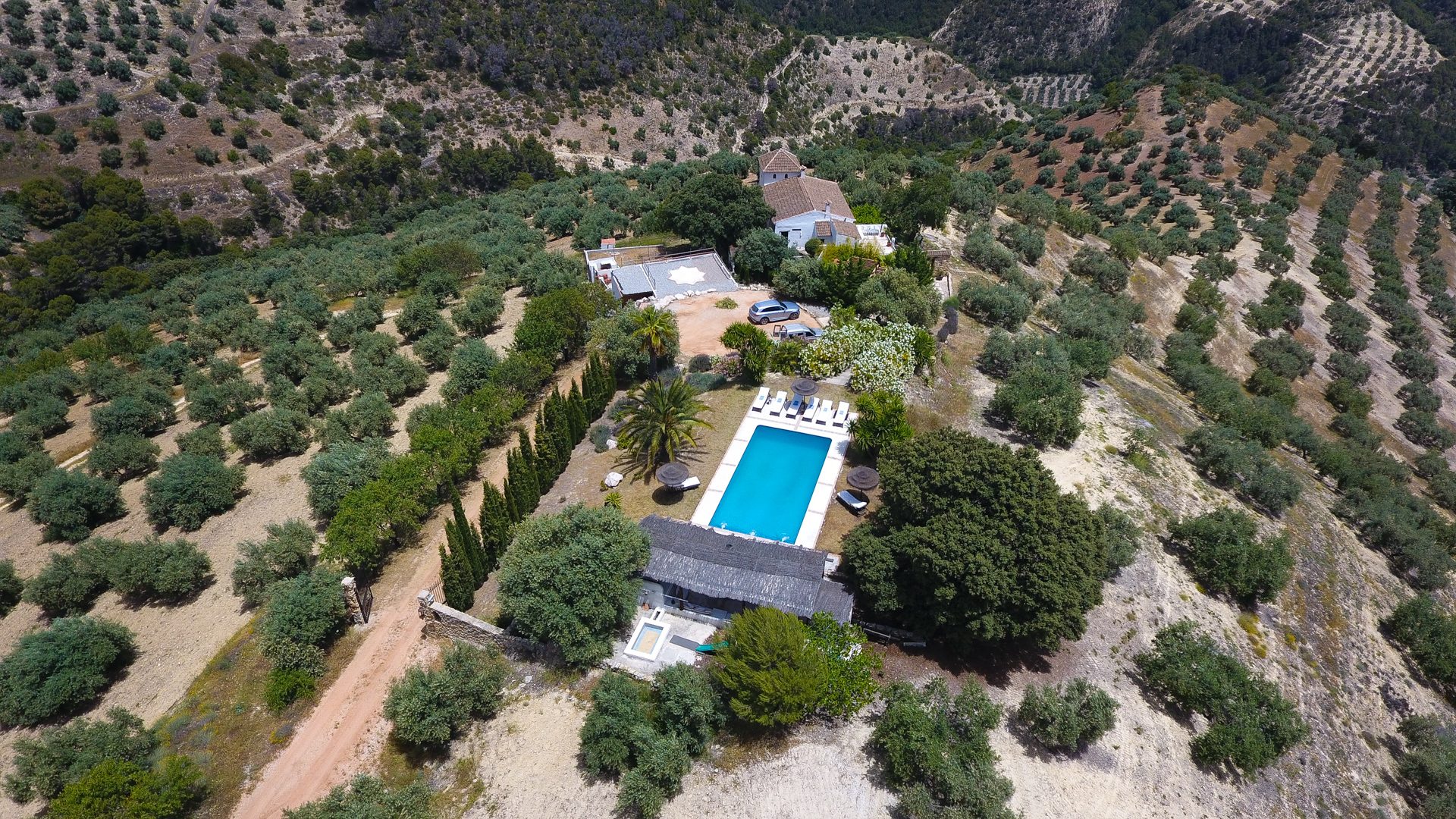
Check dates & request a stay

In depth

Granada

Check dates & request a stay